According to CNIB, an estimated 466,000 Canadians over the age of 15 are living with some degree of dual sensory loss. Deafblindness is a relatively low-incidence disability in Canada, affecting about 1% of the population, but is not recognized as distinct by the Federal Government. Many Canadians who are deafblind lack access to supports and services to help them fully engage in their communities.
What is Deafblindness?
People are considered Deafblind when they have both vision and hearing differences that make it harder to access information through sight or sound alone. Because of this, many people who are Deafblind use other ways to connect, like touch, technology, or support from others.
There are many types of Deafblindness. Everyone’s experience is unique. For example:
- Congenital Deafblindness means the person was born Deafblind or became Deafblind early in life, usually before learning language.
- Acquired Deafblindness happens later in life. It can happen for many reasons, including changes that come with aging.
Deafblindness is not just about senses, it’s about how we make sure people can fully take part in school, work, and community life.
Resources and Learning
Want to learn more? Here are a few great places to start:
- RRC Polytech’s Deaf and Hard of Hearing Services. To book an ASL-English Interpreter or for note taking support submit this form.
- CNIB Deafblind Community Services provides support and emergency services for people who are Deafblind in communities across Canada.
- DeafBlind: Blind But Not Blind | JennyLynn Dietrich | TEDxSalem (12:46)
- Busting myths about what it’s like to be deafblind | Deafblind Awareness Week | Sense (7:02)
- Insights into the Deafblind Community (59:40)
- The Canadian Helen Keller Centre
In Manitoba, the week aligns with Manitoba Access Awareness Week (MAAW), a province-wide initiative that promotes awareness, celebration, and action toward a more accessible and inclusive society.
Together, these observances recognize the leadership, contributions, and lived experiences of persons with disabilities. They also highlight the ongoing work of individuals, organizations, and communities to remove barriers and create spaces where everyone can participate fully.
Accessibility at RRC Polytech
At RRC Polytech, accessibility is a shared and ongoing commitment that shapes learning, teaching, and campus life.
Every two years, we renew our Accessibility Plan and report on progress to the Manitoba Government. The plan helps guide efforts to improve access, reduce barriers, and create more inclusive experiences for students, staff, and visitors.
Behind this work are employees, students, and teams across the Polytech community who are helping turn accessibility goals into meaningful action.
This year, in recognition of National AccessAbility Week and Manitoba Access Awareness Week, we are celebrating some of the people whose everyday efforts are helping build a more accessible and welcoming RRC Polytech.
Accessibility work happens in many different ways, through teaching, technology, communication, campus operations, advocacy, and lived experience. The stories below highlight students and employees who are helping create meaningful change across the Polytech community.
Accessibility Champions in Action – Andrea Ardiles and Erica Ament
One important part of accessibility work at RRC Polytech is the Accessibility Community of Practice.
Andrea Ardiles (Instructional Designer) and Erica Ament (Assistive Technologist) play a key role in this work. They co-lead the Accessibility Garden, a Community of Practice. The affectionate name of “Accessibility Garden” was chosen to emphasize the intent of growing awareness and skills around accessibility and accessible design.
Each month, they host sessions on topics such as:
- Digital accessibility such as in Office 365 and LEARN
- Tools to support creation of accessible materials
- Assistive technology tools such as Read&Write
- Accessible virtual meetings
- Inclusive design practices
These sessions give employees a space to ask questions, share challenges, and learn from each other. For many participants, especially those new to accessibility, the Accessibility Garden is a helpful place to learn.
Andrea and Erica have presented on Accessibility at RED Forum, together and individually. They also collaborate with the Diversity Team on the Accessibility Quick Tips for staff, launched in 2024. These monthly tips share simple ways to improve accessibility in everyday work. Topics include accessible documents, training, and inclusive meetings.
Erica also authors the “Tech Tips: Work Smarter, Not Harder” blog, where she focuses on boosting academic and workplace efficiency by showcasing practical strategies and accessible technologies available to all students and employees—including tools in MS Office, Windows, and Read&Write. She also regularly highlights accessibility features, such as captioning, that benefit the entire campus community, not just individuals with disabilities.
Andrea has delivered training for staff and instructors on how to create accessible materials. Andrea runs the ‘Foundations in Digital Accessibility’ workshop series, which has shown to teach accessibility practices in an encouraging and approachable way. You can catch her live at her upcoming RED Forum session ‘Course Material Tune-Up: An Accessibility Repair Session’.
Together, their efforts help build a stronger culture of accessibility across RRC Polytech.
Thank you, Andrea and Erica, for your ongoing leadership in supporting accessibility awareness and learning across the college!
Breaking Barriers: Deaf and Hard of Hearing Services
Over the past year, Deaf and Hard of Hearing Services (DHHS) has advanced several key initiatives to strengthen accessibility for Deaf and Hard of Hearing students, staff, and community members across RRC Polytech. A central focus has been improving access to information by adding ASL videos to the DHHS webpage and other institutional materials. Providing information in multiple formats—particularly in ASL—ensures that Deaf students can access important content directly in their preferred language. This work reflects a broader commitment to reducing communication barriers and supporting equitable participation across the College community.
To further enhance digital accessibility, the DHHS manager and interpreting team have advocated for an embedded ASL window rather than directing users to a separate ASL link. This integrated approach aligns with best practices and ensures that ASL access is visible and equitable. In line with AMA requirements, DHHS also continues to ensure that closed captions are added to all posted videos, supporting a wide range of individuals who benefit from text‑based access.
Beyond digital content, DHHS has strengthened campus-wide accessibility practices by working to ensure that any College‑hosted event open to the public as well as College events and activities, are automatically staffed with interpreters whenever possible. This shifts the responsibility for accessibility away from Deaf and Hard of Hearing participants and places it appropriately with the institution. It also reinforces the principle that accessibility is a shared campus responsibility—not something that rests solely within one department.
Much of the work that supports equitable access happens behind the scenes: coordinating interpreting services, communicating with faculty and RRC Polytech staff, planning accommodations, advocating for access and equity, building campus-wide understanding of our legal obligations related to accessibility and ensuring that information is shared in accessible formats. These everyday efforts play a critical role in enabling students and Deaf faculty and staff to fully participate in academic and campus life.
DHHS is also streamlining the accessibility feedback process, making it easier for Deaf and non‑Deaf consumers to share experiences, request information, or identify barriers directly with DHHS. This feedback can be provided in written form or in ASL. This demonstrates an ongoing commitment to inclusion, responsiveness, and continuous improvement in the services we provide.
Collectively, these initiatives reflect RRC Polytech’s core values of inclusion, community, student success, and removing barriers to education and in the workplace. By expanding ASL access, strengthening communication equity, and embedding accessibility into institutional practices, DHHS continues to help create environments where ASL users can participate meaningfully, feel a sense of belonging, and access opportunities more equitably.
A special thank you to the Deaf and Hard of Hearing Services (DHHS) team: Jill Patterson, Sheryl LaVallee, Lauri Van-Heyst, Arleen An, Shannon Graham, Chad Kroeker, Alanna Iftody, and Mariette Koop, for your ongoing work and advocacy.
Behind the Scenes: Groundskeeping and Winter Accessibility
With another Manitoba winter behind us, it is a good time to recognize the Groundskeeping team for the important work they do behind the scenes to keep campus safe and accessible.
During winter months, the Groundskeeping team often begins work as early as 2:00 a.m. to clear snow from parking lots, roads, entrances, sidewalks, and ramps before students, staff, and visitors arrive on campus.
Once snow is cleared, the team quickly shifts to ice maintenance, spreading sand and grit in areas where icy conditions may create safety concerns.
As weather shifts throughout the day, the team continues to monitor campus conditions and respond to ongoing freeze-thaw cycles to help prevent barriers before they happen.
Their work may happen behind the scenes, but its impact is felt across campus every day.
A big shoutout to the Groundskeeping team: Chuck Harris, Kevin Kruse, Ryan Skelton, Brady Barron, Derek Berry, and Bryan Haswell, for the important work you do to help keep our campus safe and accessible.
Designing for Learners: Faculty Development and Inclusive Teaching
As our student population becomes more diverse, creating inclusive learning environments that support every learner is more important than ever.
At RRC Polytech, Organizational Development’s Faculty Development Consultant, Claudius Soodeen, plays an important role in helping instructors build classrooms where all students can succeed. He supports instructors in strengthening their communication, improving course design, and enhancing teaching practices.
This work is grounded in collaboration with internal and external experts, including people with lived experience of disability and neurodiversity, to ensure learning reflects real needs and perspectives.
Through practical, hands-on learning opportunities, instructors are building skills that help reduce barriers and create more accessible classrooms for all students.
Some of the key sessions include:
- Designing Neurodiversity-Affirming Learning Environments, a collaboration with researcher-practitioners with lived experience of disability
- Plain Language Writing (with and without AI), facilitated by Janine Bucklaschuk and Jake Carewick
- Foundations in Digital Accessibility, facilitated by Andrea Ardiles
You can read more about these sessions in Staff Forum.
A big thank you to Claudius and his collaborators, for helping build more inclusive classrooms and improving learning experiences across RRC Polytech.
Student Accessibility Stories from Across RRC Polytech
In April, students shared their experiences with accessibility at RRC Polytech. Their stories highlight how support, advocacy, and inclusive design can make a meaningful difference.
Kelvin Dyck, Business Administration (Accounting Major)
“I received a health diagnosis that dramatically affected my ability to attend and succeed in my studies. Accessibility Services informed me of the wide variety of supports available, assisted me in getting the necessary documentation, and approved all accommodations that I needed to succeed.
These include exam accommodations, Safe Ride program, support for a reduced course load, and counseling services. The accessibility supports at RRC are a primary reason I am succeeding in my studies.”
Valeri Kelly, Nursing
“After my first full year of being at the college I noticed the library does a lot of borrowing of supplies, they borrow out chargers, white board markers, mouse’s etc and I thought to myself “what about fidgets”;
I brought my idea to the attention of the campus wellbeing facilitator and immediately we connected with individuals in charge of the borrowing system of the library to get the ball rolling. From start to finish it took roughly 5 months to get fidgets in the system.
Stimming is a way for neurodivergent (diverge from typical neuro wiring) to self-regulate, self sooth in addition to aiding in focus to name a few benefits; good news is EVERYONE is welcome to stim as it’s just another way to release energy from the body. Having different types of fidgets for individuals to try can aid in their studies and self-discovery but also helps normalize stimming overall and encourage everyone to freely move their body in a safe and self-soothing way.”
Joseph Ilunga, Student
“As a student at Red River College Polytechnic and someone living with cerebral palsy who uses a power chair, I worked on developing an Emergency Management System as part of a full-stack team.
I contributed by building features with Next.js and improving the interface to be clear, mobile-friendly, and easy to navigate for all users. I intentionally focused on accessibility by simplifying layouts and reducing barriers, drawing from my own experience navigating systems that aren’t always designed with people like me in mind.
This work reflects RRC Polytech’s commitment to inclusion and accessible design. The outcome was meaningful because I helped create a system that not only works well but is usable and inclusive for a wider range of people.”
William Canard, Community Development Diploma
“When I started at RRC Polytech as a totally blind student, accessibility was not just a support service to me — it was the difference between participation and exclusion. Throughout my program, I worked closely with instructors, accessibility supports, and adaptive technology to find practical ways to navigate coursework, research, presentations, spreadsheets, and collaborative projects in environments that are often designed visually first.
One of the biggest challenges I faced was working with Microsoft Office applications, especially Excel, using screen reader technology. Many workflows that are simple visually become far more complex when relying entirely on keyboard navigation and audio feedback. Over time, I developed detailed methods and strategies for using Narrator and other accessibility tools more efficiently within Word, Excel, Teams, and PowerPoint.
Rather than keeping those strategies to myself, I began developing structured guides and practice materials designed to help other blind or low-vision users learn these workflows more independently. What started as a personal accessibility challenge became an opportunity to contribute practical accessibility knowledge that could benefit others in the RRC community and beyond.
During my studies, accessibility also shaped the major projects I completed. For my capstone project with New Directions, I conducted a qualitative analysis using Personal Outcome Measures data. Completing this work as a blind student required adapting research and data-management workflows that are often highly visual, particularly when working with spreadsheets, online document systems, and large volumes of coded information. Through collaboration, problem-solving, and accessible technology, I was able to complete the project and present the final results to community partners in a professional and accessible format.
Accessibility and inclusion also influenced a community development proposal I created called Nagamo-Agamig, meaning “Music Lodge.” The project focused on creating an accessible and inclusive community music space where people of different ages, abilities, and experience levels could participate without financial or social barriers. My own lived experience with disability helped shape how accessibility, participation, and belonging were integrated into the project design from the beginning rather than added afterward.
Accessibility at RRC Polytech also showed up in smaller but equally important ways: instructors willing to adapt materials, flexibility around accessible formats, and people who took the time to listen when barriers were identified. Those actions may seem small individually, but together they created an environment where I could succeed academically while managing vision loss and regular dialysis treatments.
By the end of my program, I completed my studies with strong academic standing while also contributing to conversations around accessibility, inclusion, and community participation. My experience reinforced that accessibility is not simply about accommodations — it is about creating systems where people can fully participate, contribute, and succeed.”
These stories show accessibility in action at RRC Polytech. Whether redesigning course materials, improving communication access, clearing pathways before sunrise, or sharing lived experiences, each effort helps build a stronger and more inclusive community.
As we recognize National AccessAbility Week and Manitoba Access Awareness Week, we thank the students, employees, and teams whose work continues to make a meaningful difference across RRC Polytech.
]]>Pride Month traces its roots to the 1969 Stonewall Uprising in New York City, when members of the 2SLGBTQIA+ community and their supporters stood up against police violence and discrimination at the Stonewall Inn. This moment became a turning point for the modern 2SLGBTQ+ rights movement and inspired years of advocacy, protest, and progress around the world.
Why Pride Still Matters and the Importance of Allyship
Despite progress in rights and representation, many people in the 2SLGBTQIA+ community still face discrimination, exclusion, and safety concerns. Visibility is important, but being seen doesn’t always mean being included, respected, or safe.
This is why Pride still matters. Pride is a celebration of identity, resilience, and the progress of the 2SLGBTQIA+ community, but it also reminds us that the work isn’t done. Challenges remain, and real change requires continuous action.
Allyship is how we turn visibility into meaningful support and change. It means actively supporting the 2SLGBTQIA+ community through steps like:
- Listening and learning from others’ experiences
- Speaking up against unfair treatment
- Supporting and validating people’s identities
- Amplifying voices that are often ignored
- Creating spaces where 2SLGBTQIA+ people feel welcome and valued
Pride is both a celebration and a call to action. By showing up, learning, and acting alongside the community, we can transform visibility into true inclusion and continue addressing the challenges that remain.
Pride at RRC Polytech
At RRC Polytech, Pride is reflected through community participation, allyship, and creating inclusive spaces for students and staff.
Winnipeg Pride Parade
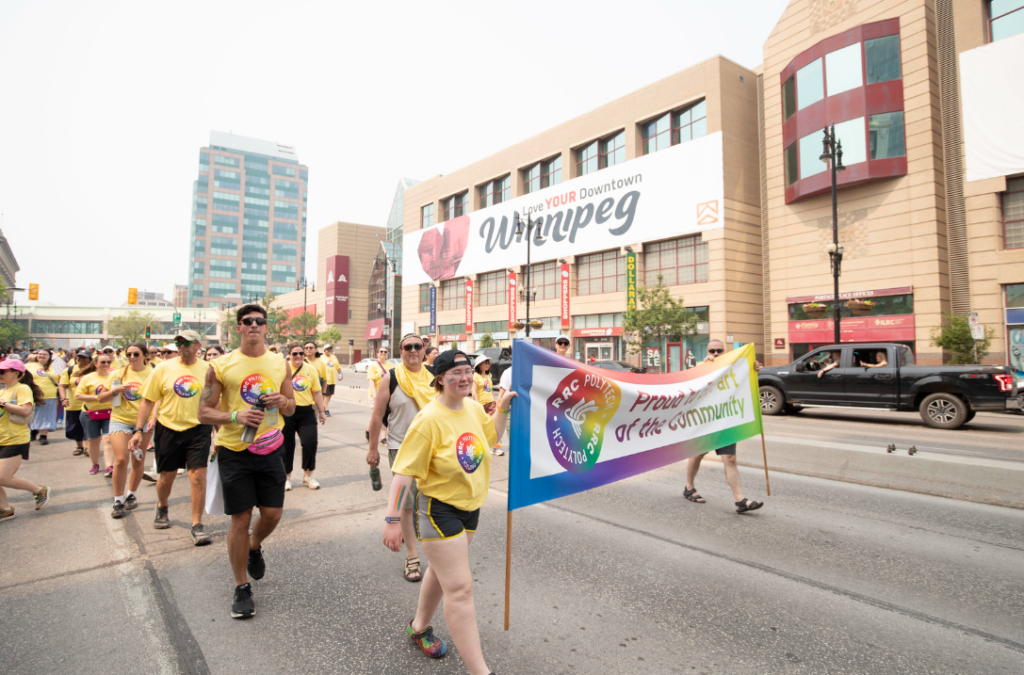
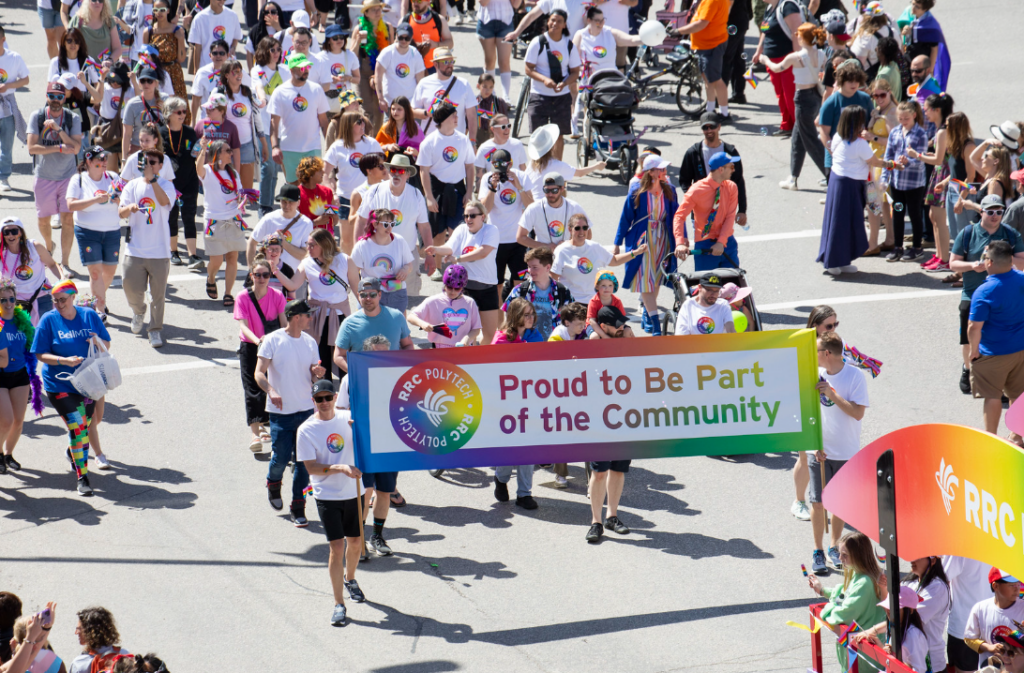
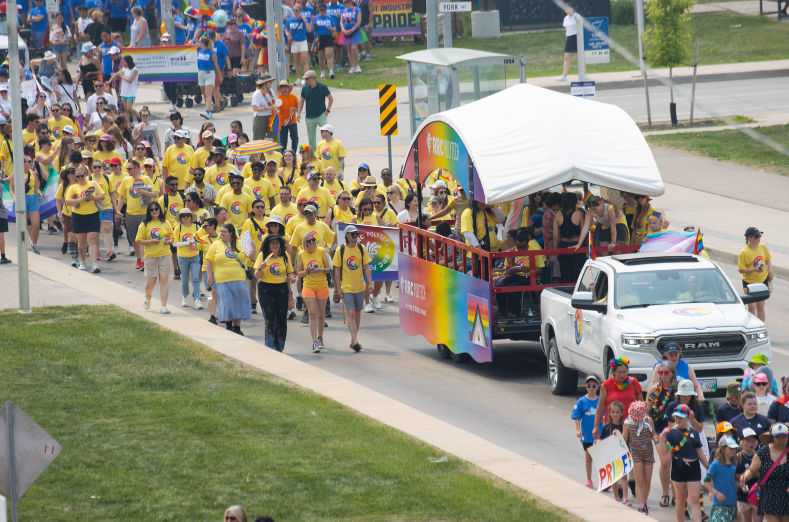
Over the past several years, RRC Polytech has proudly joined the Winnipeg Pride Parade, one of Manitoba’s largest celebrations of diversity, inclusion, and community pride.
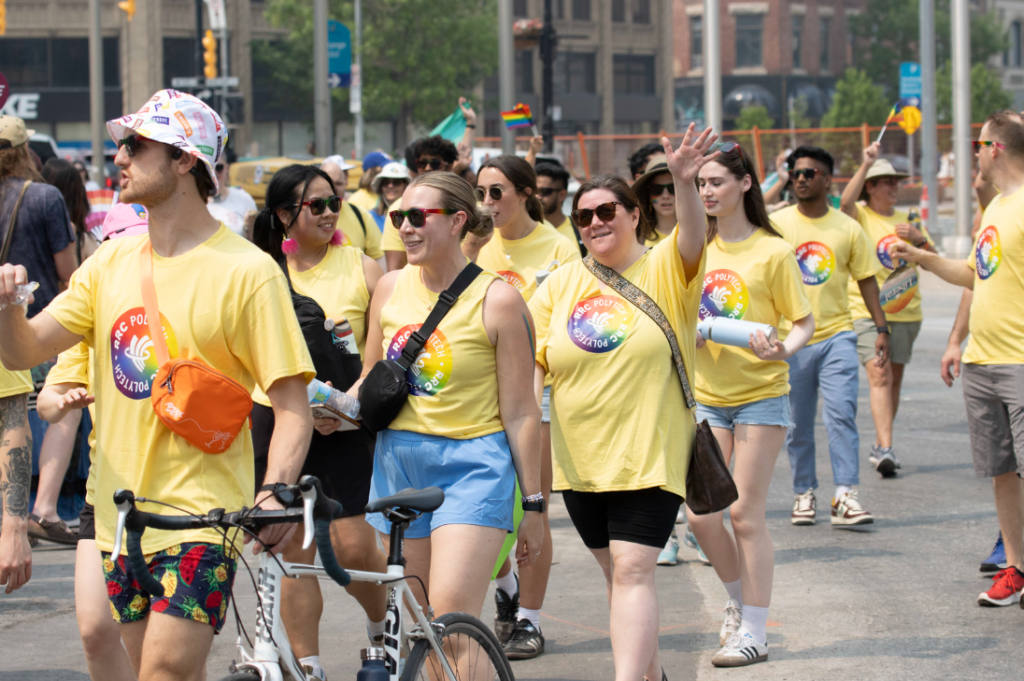
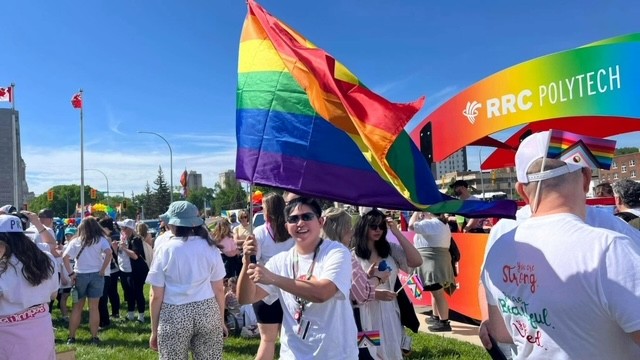
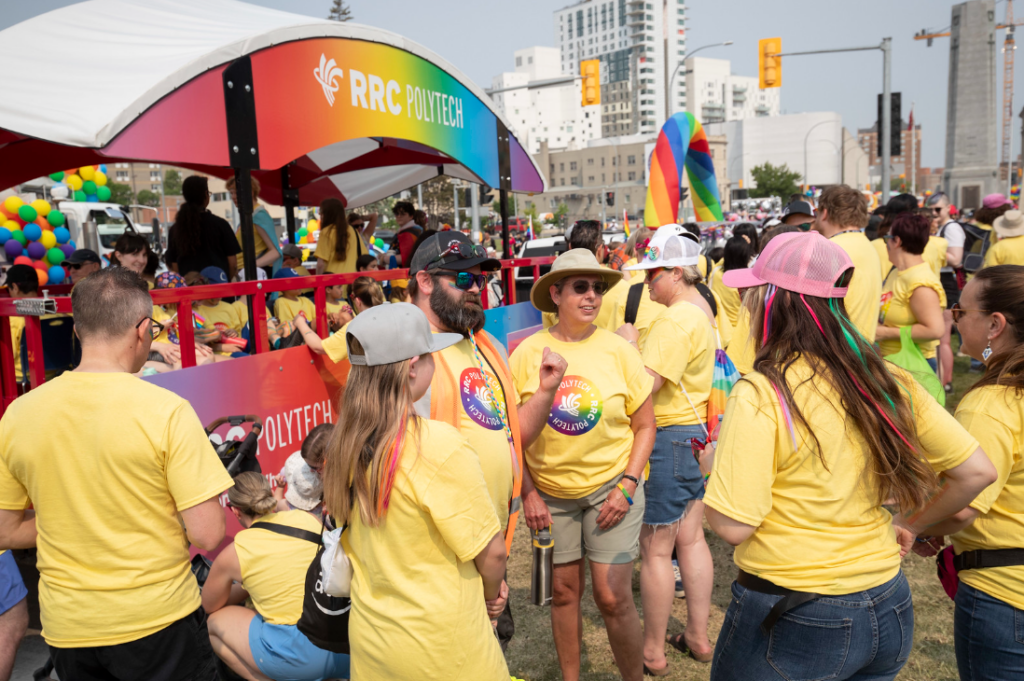
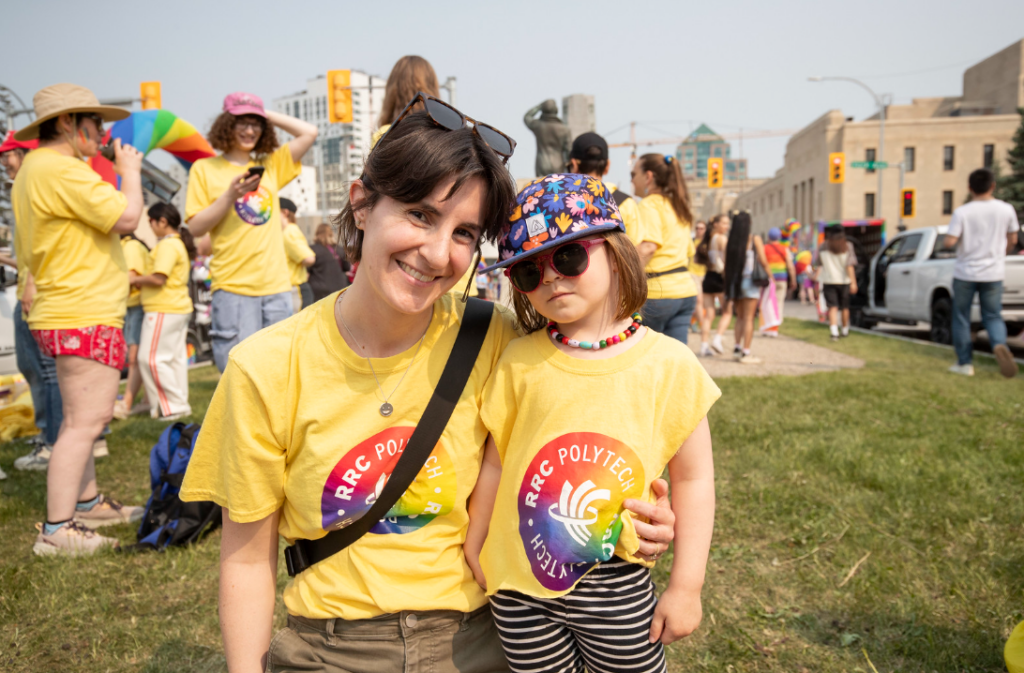
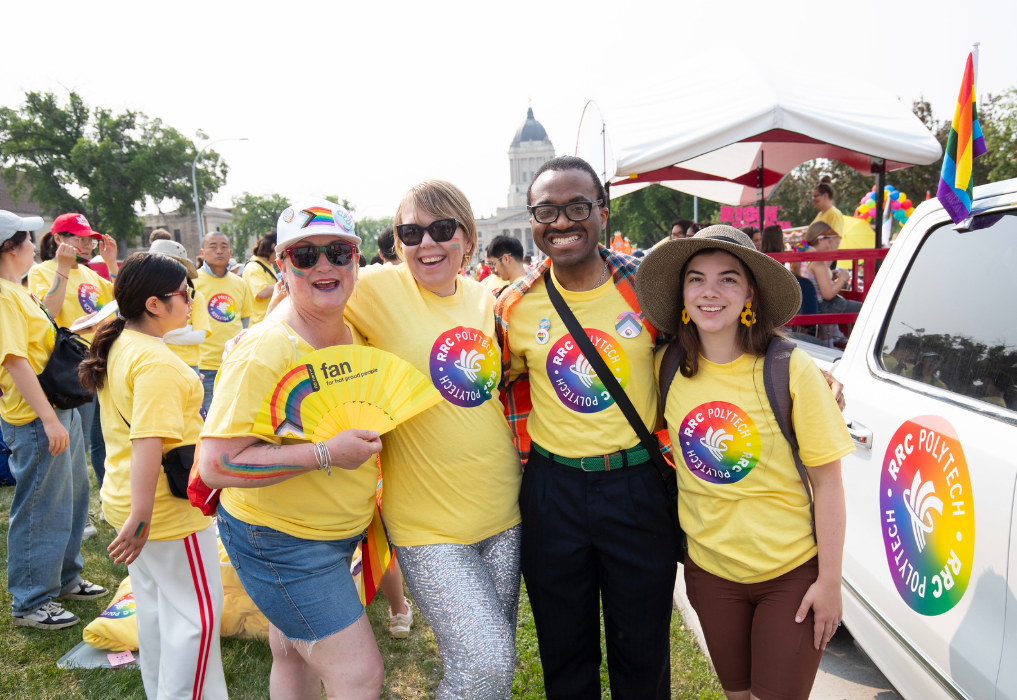
On June 1, 2025, more than 335 students and staff marched together in support of the 2SLGBTQIA+ community, gathering alongside thousands at the Manitoba Legislative Building to celebrate visibility, belonging, and inclusion.
Check out the Pride Parade Photos on RRC Polytech’s Flickr page.
Behind the Pride Float
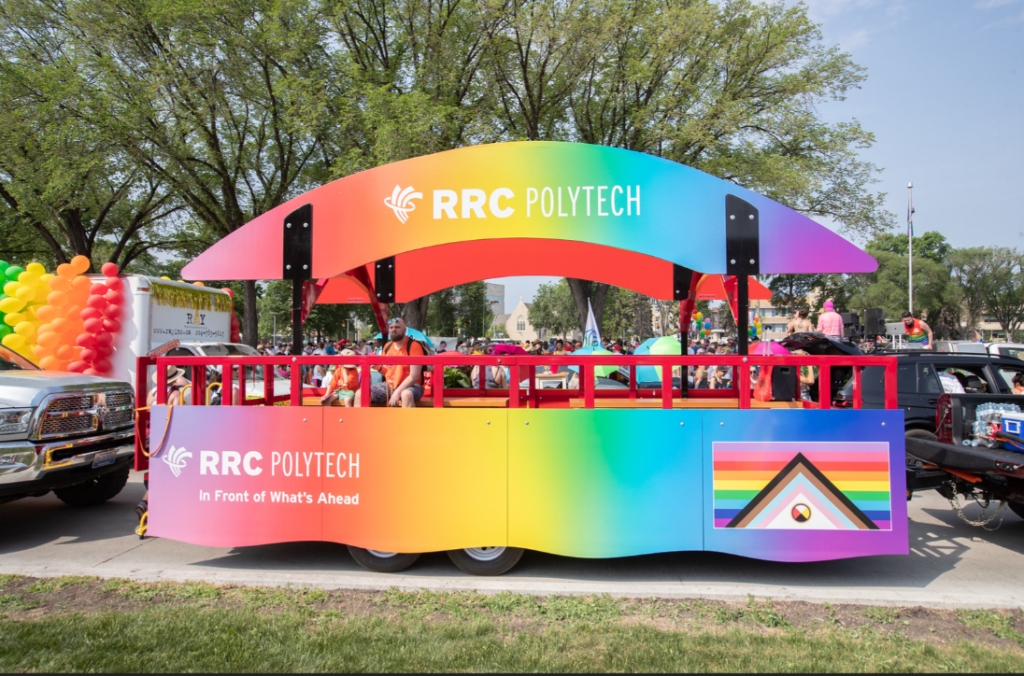
One of the most recognizable parts of RRC Polytech’s participation in Pride is the annual Pride float.
The float is a collaborative project led by the Pride Planning Committee and built by teams from the School of Skilled Trades and Technologies. It features RRC Polytech’s personalized Pride design, an evolution of the Progress Pride flag that represents all members of the 2SLGBTQIA+ community and includes specific Indigenous elements. This reflects the Polytechnic’s ongoing commitment to equity, diversity, inclusion, and reconciliation.
Each year, the float is updated to better support 2SLGBTQIA+ students, staff, and community members attending the parade. This year, accessibility is a key focus, with efforts underway to ensure the float is welcoming for all participants, reflecting RRC Polytech’s broader commitment to inclusion.
Community Voices: Reflections on Pride Month
Leading up to Pride Month, students and staff shared reflections on what Pride means to them and why participating matters. Each perspective helps build a broader understanding of Pride and its impact within our community. These stories highlight how Pride creates connection, belonging, learning, and support.
What Pride Month means to us personally and within the community
Angela Chow, People Services
“My family and close friends are part of the 2SLGBTQIA+ community. I love and am proud of them. In 2024, I reached a turning point when I started participating in Pride activities and learning from the experiences of those around me. Since then, Pride Month has become a personal awakening, inspiring me to actively support my friends and family, show up for and walk alongside the 2SLGBTQIA+ community, and continue learning from the people I care about.”
XIAOJUAN WU (LUNA), student, English Academic and Professional Program
“For me, Pride Month means respect, acceptance, and the freedom to be yourself. It reminds me that everyone deserves to feel safe and supported in their community. This experience helped me understand the importance of standing with others and celebrating differences.”
What attending the Winnipeg Pride Parade felt like
Emily Doer, College and Public Relations
“Participating in the Winnipeg Pride Parade with the RRC Polytech community always reminds me why I’m proud to work here – because we show up for one another and create spaces where people feel safe and supported. In recent years, being able to bring my young children along has made it especially meaningful, giving us the chance to talk about allyship, belonging, and the power of community.”
Marion Queen Ramos, student, Applied Computer Education (ACE)
“June 2024 was my first Pride. I arrived in Canada in December 2023. I had traveled to fifteen countries, but nowhere had I felt free enough to wave a rainbow flag and stand fully in my truth.
In front of the RRC Polytech float, with the flag in my hands and the sun above me, something shifted. Years of fear, silence, and self-doubt gave way to a profound sense of freedom. For the first time, I was not hiding. I was celebrating the person I had always been.
That experience captures more than a joyful moment. It marks the day I chose authenticity over fear. After all the places I had visited, the greatest journey was finding the courage to come home to myself.”
LIPING SHENG, student, English Academic and Professional Program
“This was my first time volunteering and participating in the Pride parade. I enjoyed seeing people from different backgrounds come together and express themselves freely. The event made me feel welcomed and connected to the community.”
LI HUANG (April), student, English Academic and Professional Program
“Volunteering at the Pride Parade was a meaningful experience for me. The event was very different from the culture I grew up with in my home country. It helped me see that everyone should be free to love and express themselves without worrying about other people’s opinions. I also met people from different backgrounds and learned the importance of respect, inclusion, and acceptance. This experience helped me better understand the diversity of our community.”
Memorable moments from past parades
Erika Blatz, Executive Office – VP Academic Office
“Yes—there’s a moment that’s stayed with me since the last Pride Parade. It was when a wave of cheers rolled through the street and strangers started smiling at one another like we’d known each other for years. I remember the rainbow flags catching the light, the music pulsing, and people along the route reaching out for high-fives and hugs—little gestures that felt unexpectedly powerful. In that instant, it wasn’t just a celebration; it felt like a shared promise that everyone belonged exactly as they are. That sense of connection and affirmation is the exact reason I keep coming back to the Pride Parade.”
Laina Hughes, College and Public Relations
“Last year, my family and I attended the Pride Parade for the first time together. My kids were excited about all the rainbows and stickers, though I also wanted to explain what Pride was about in a way they’d understand. I remember telling my then-4-year-old daughter that it was important to celebrate Pride because everyone should be free to love who they want to love, and she just looked at me and said, “I know, Mommy!” like it was the most simple thing in the world. Because, it is.”
Why showing up at Pride matters
Dr Obren Amiesimaka, Academic Executive Administration
“Joyful visibility! It is always important to be visible in queer joy, doubly so in these times when 2SLGBTQIA+ rights are under attack; to show the world that we are here, always have been and always will be. It is also a message of love to queer folx who are struggling and/or unable to be out; it says that they are not alone, they are perfect and whenever they’re ready, there is a big community waiting to welcome them.”
Felipe Gomes, Marketing and Web Presence
“Showing up at Pride is deeply personal to me because it represents a journey I once never thought I could fully live. Before moving to Canada, I was closeted in Brazil and often afraid to fully express my sexuality, personality, and authentic self. Volunteering as Marketing Director and serving on the board of Pride Winnipeg became a full-circle experience: it gave me the opportunity not only to embrace who I am openly, but also to help create spaces where others could feel seen, celebrated, and safe to do the same. Being part of the RRC Polytech Pride Parade reminds me how powerful visibility, community, and belonging can be.”
Terri-Lynn Anderson, School of Continuing Education
“Attending Pride is personally important to me because I bring my children each year to model acceptance, celebrate diversity, and show them that our family stands for inclusion and belonging. It’s also an opportunity to demonstrate my commitment to accepting them as their authentic selves and for them to know that they can be who they are, as they are, and they will also feel loved and supported by my husband and me.”

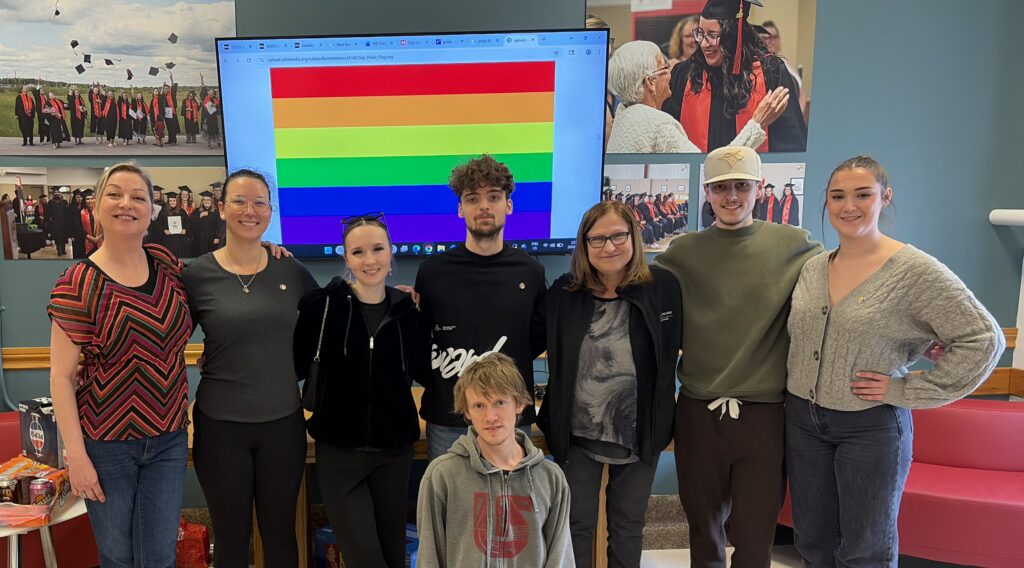
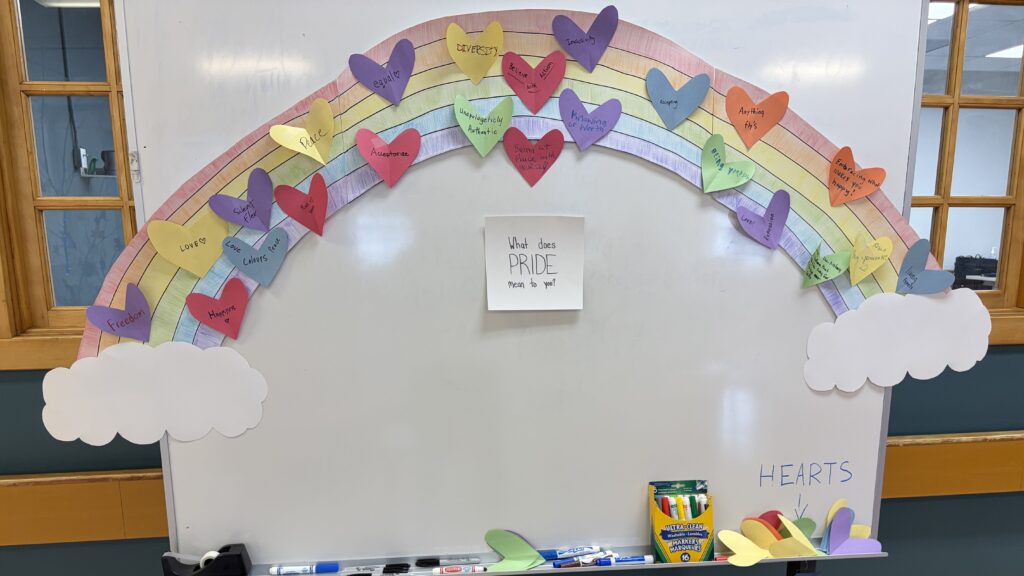
Pride Month Kickoff at the Interlake and Peguis-Fisher River Campus
A big shoutout to the Interlake and Peguis-Fisher River Campus in Selkirk for kicking off Pride Month on April 16 with a student-led celebration. The event, organized by Business Administration students, brought the campus community together through activities, conversations, and resources focused on Pride and inclusion.
One highlight was a surprise performance by a student from the Health Unit Clerk program, creating a meaningful and uplifting moment. The event fostered a welcoming and positive space for all attendees.
Show your Pride with RRC Polytech!
This Pride Month, RRC Polytech encourages students, staff, and community members to take part in Pride Month activities throughout June.
2026 Winnipeg Pride Parade and Rally
March alongside students, staff, and allies with the RRC Polytech Pride float to show your support for the 2SLGBTQIA+ community.
- Date: Sunday, June 7, 2026
- Rally: 10:00 a.m. at the Manitoba Legislative Grounds
- Parade: begins shortly after 11:00 a.m.
Participants are encouraged to re-wear last year’s bright yellow Pride shirts as part of sustainability efforts. A limited number of new shirts will also be available.
Register today to reserve your shirts and let us know you’ll be walking with us!
Pembina Valley Pride event in Winkler
Be part of the first-ever Pembina Valley Pride celebration! RRC Polytech’s Winkler Campus will host a booth with games and giveaways, connecting with the local community.
- Date: Saturday, June 13, 2026,
- Location: Triple E Mainstage, 1201 Grandeur Avenue, Winkler, MB
- Rally: 12:00 p.m. at RRC Polytech’s booth
- March: begins shortly after 1:00 p.m.
Participants are encouraged to re-wear last year’s bright yellow Pride shirts as part of sustainability efforts.
Portage la Prairie Pride event
Join Portage Campus in partnership with Portage la Prairie Pride for a Pride Walk. The campus will serve as a safe meeting space to launch the walk.
- Date: Saturday, June 27, 2026
- Please follow Pride Portage la Prairie | Facebook for event details.
Pride Month is both a celebration and a reminder of the ongoing work toward inclusion, dignity, and human rights.
At RRC Polytech, Pride is reflected not only through events and symbols, but also through the people who share their stories, support one another, and help build a more welcoming community.
This June, we invite you to take part not only in celebration, but also in continued learning, connection, and action.
]]>Standing against homophobia, biphobia and transphobia is essential, which is why May 17th each year is the International Day Against Homophobia, Biphobia, and Transphobia (IDAHOBIT). The theme of #IDAHOBIT2026 is “At the heart of democracy”, underlining that justice and equity for everyone is at the centre of truly democratic societies. In that spirit, we hear eight voices from amongst our staff and students on the importance of IDAHOBIT.
IDAHOBIT means a lot
The significance of this observance cannot be overemphasised: “IDAHOBIT is a day of visibility, reflection, and courage. It reminds me that people like me exist everywhere, even in places where it is difficult to be open. … it represents both how far we still need to go and how important it is to speak up and be seen.”
Another voice notes the day helps raise awareness that “we’re still making progress on the path towards inclusion, acceptance and understanding” and it spotlights “topics that are tough for some to talk about and accept.” “This day will continue to be relevant as long as there’s resistance towards 2SLGBTQIA+ rights”.
For yet another contributor, IDAHOBIT provides an opportunity to share “personal experiences of homophobia in the hopes that it might make space for individual reflection and change.” However, care should be taken for it not to feel “like a performative occasion where institutions …pat themselves on the back.”
The dad of a transgender child, on IDAHOBIT, celebrates “watching [his] son (assigned female at birth) move from a place of anxiety and depression in junior high, to being a confident, thoughtful and assured high school student with his sights clearly set on post-secondary education.” He also celebrates “love, curiosity and connection as the basis for human thriving” alongside “organizations like Trans Manitoba – who fight for trans rights and visibility, and the rights of people of all genders.”
It is also a time when he reflects on how: “shame, judgment, blame and violence continue to be seen as acceptable responses to trans folks, [and] trans people are categorized as aberrant, mentally unwell, and therefore, a target for attack”.
Describing Homophobia, Biphobia and Transphobia
Homophobia, biphobia and transphobia “are forms of fear, misunderstanding, and prejudice” based on people’s sexual orientation and gender identity. This can present in different forms: “avoidance and micro-aggressions, … the laws …and regulations”, alongside “strangers misgendering you/your partner, forms that can’t be accurately completed, and in people’s actions from disgusted smirks to physical violence.” They can also be on a range of levels, from systemic and structural to internalised and interpersonal. “For example, as a bisexual person, [a contributor] faced stereotypes and lack of acceptance even in queer spaces.” In whatever format, homophobia, biphobia and transphobia cause “emotional, psychological and physical harms within the 2SLGBTQIA+ community.” Some note that the ‘phobia’ part does not indicate a justified fear but a willful antipathy towards the very existence of queer folx.
The world we deserve
A world without homo-, bi- and trans-phobia is one where queer folx “don’t have to explain or justify who they are”, “would be able to open… socials without [seeing] acts of hate.”; and where “what you have (or don’t have) in your pants is no longer interesting.”
As a contributor says:“It looks like my family members acknowledging my spouse, not my “friend”, and celebrating our marriage equally to those who had straight marriages. It looks like inclusion that goes beyond tolerance and into celebration of the uniqueness 2SLGBTQIA+ [folx] bring to our vibrant world. …It’s not only allowing us to eat at the table, but it’s meeting our unique ‘diets’ and not complaining about the inconvenience but being excited that you get to try something new because we’re at the table. It looks like safety when we travel, and not having to research laws and perceptions before booking the trip. It looks like checking into hotels and not being questioned for having one bed. It looks like servers not mistaking us for friends or for our gender presentation. It looks like all men having the freedom to embrace femininity without fear of being othered.”
Anti-2SLGBTQIA+ myths got to go!
There are several homo-, bi- and trans-phobic myths that must be set aside; such as the ideas that queer folx “must have mental illness”, choose to be 2SLGBTQIA+, or are a passing “trend” or “fad”. Others are that “it is ‘common sense’ that everyone is either a man or a woman”, or that “bisexual people are ‘more likely to cheat’ or are ‘confused’. … Trust and loyalty are about a person’s character, not their sexual orientation”.
Tips on supporting IDAHOBIT
Anyone wishing to uphold the IDAHOBIT spirit should “listen to us. Vote like our lives depend on it (they do). Be open to unlearning, and when you make a mistake, do not ask us to make you feel better about it. Learn. Move forward knowing better and doing better. Help us carry the weight.”
“Go into the world with curiosity and a humble desire to understand (not judge) that which seems different to you… There are many experiences of being a man or woman all along a spectrum.” “Avoid making assumptions about others’ identities. Stand up when you see discrimination, even in small everyday situations. And most importantly, create spaces where people feel safe to be themselves—because acceptance starts with how we treat each other daily.”
“Be kind”, “keep an open mind” and allow yourself to “unlearn … to aid in relearning a new narrative.”
The quotes shared in this blog reflect the personal views of the contributors.
At RRC Polytech, we acknowledge that homophobia, transphobia, and biphobia exist, and that their impacts are real. We strive to create safe and supportive spaces for meaningful reflection and conversation, while recognizing that these topics may bring up strong emotions, particularly for those with lived experience.
We encourage students and staff to take care of their mental health and access the available supports and self-care resources through the Supports and Resources page and Staff Forum.
]]>
May is Canadian Jewish Heritage Month, a time to explore and celebrate Jewish culture, faith, and history, and to honour the enduring contributions of Jewish communities to Canada’s social, political, and economic life.
The month also holds special significance for Jewish communities worldwide, as it often aligns with Shavuot, the Festival of Weeks, which marks the spring harvest and commemorates the giving of the Torah.
Learn more about Jewish culture and history, and celebrate Jewish Heritage Month with the following resources:
National Film Board of Canada:
- The Jews of Winnipeg, Bill Davies, 1973 | 27 min.
- Full Film Selection for Canadian Jewish Heritage Month
- 12 Books to read for Jewish Heritage Month via CBC
- The Secret Life of Canada: Jewish Montreal: A culinary history – A CBC podcast episode
- CCDI Webinar: Antisemitism: How to recognize and prevent it in the workplace
- Login is required. Free to sign up for RRC Polytech staff.
At RRC Polytech, Asian Heritage Month is not just something we look back on. It is something we live and shape every day. Our community reflects a rich diversity of experiences. This includes Asian immigrants, international students, Canadian-born Asians, and people of mixed heritage. These experiences remind us that heritage is not fixed. It changes and grows with us.
I Am Asian
Story shared by Angela Chow, RRC Polytech
I am proud to be Asian.
I was born and raised in the Philippines and come from both Filipino and Taiwanese heritage. While I spent most of my life in the Philippines, I also had the opportunity to travel across Asia, including Japan, South Korea, China, Thailand, Vietnam, and Taiwan. Each place has its own culture, traditions, and stories to tell.

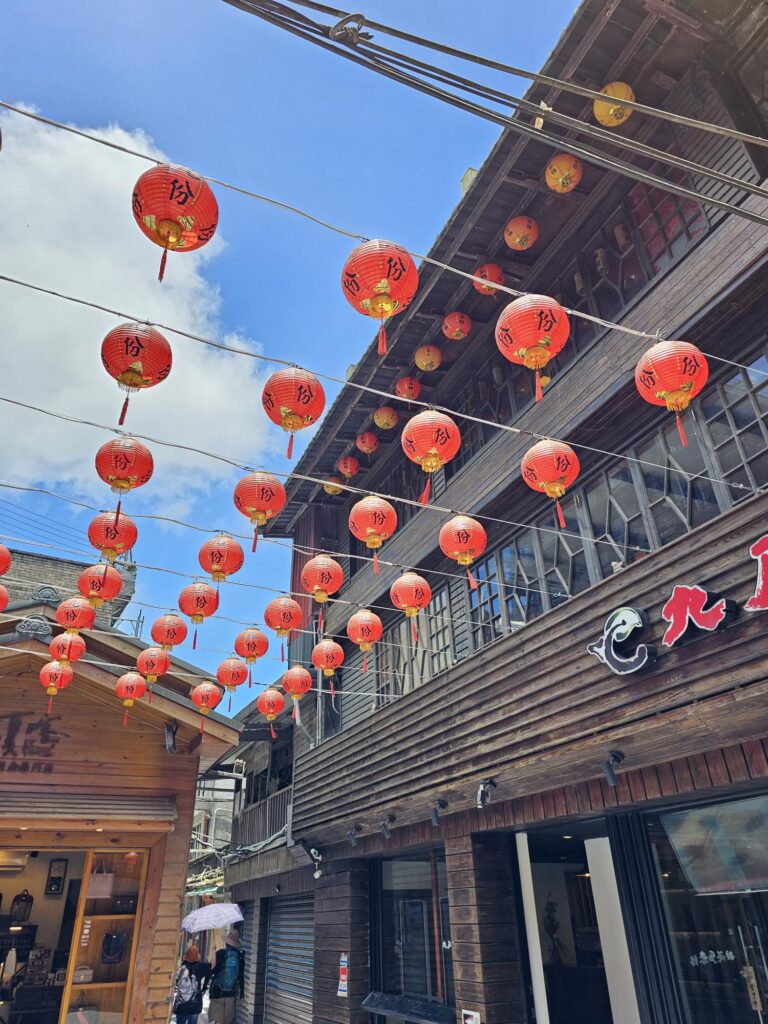
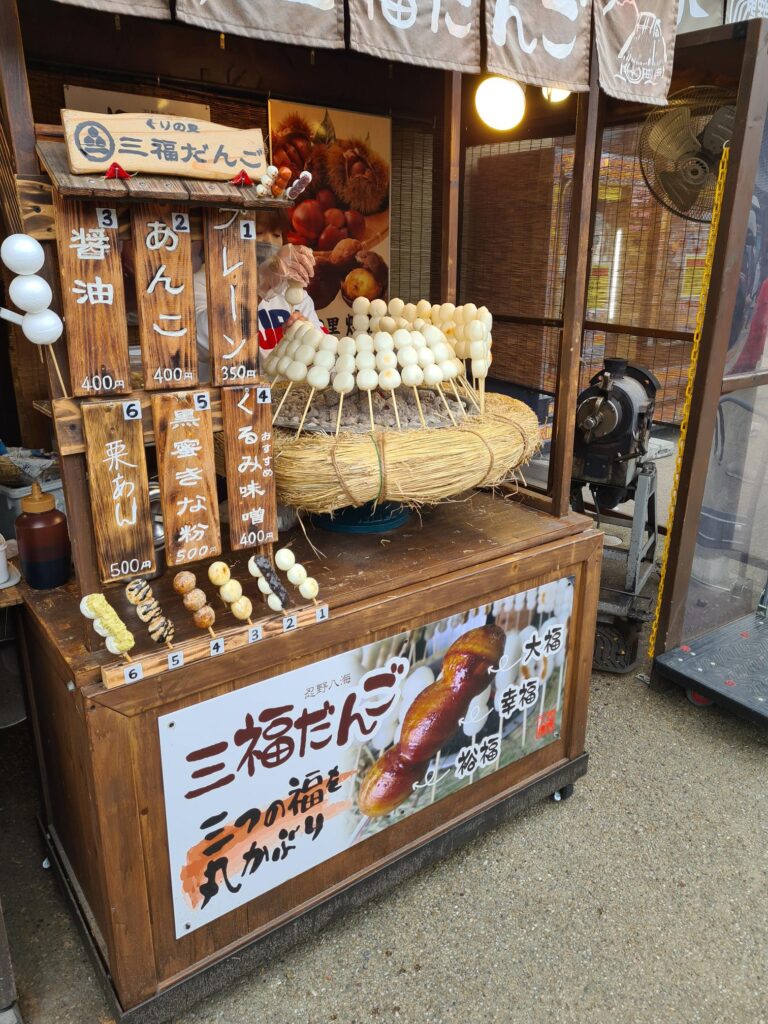
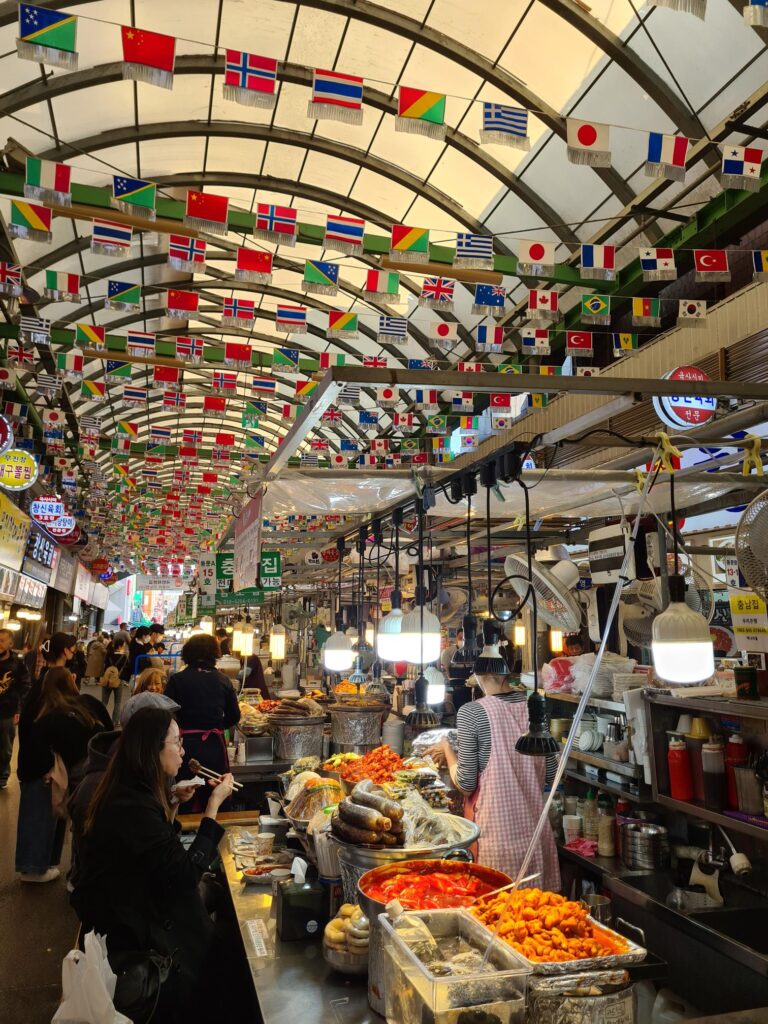
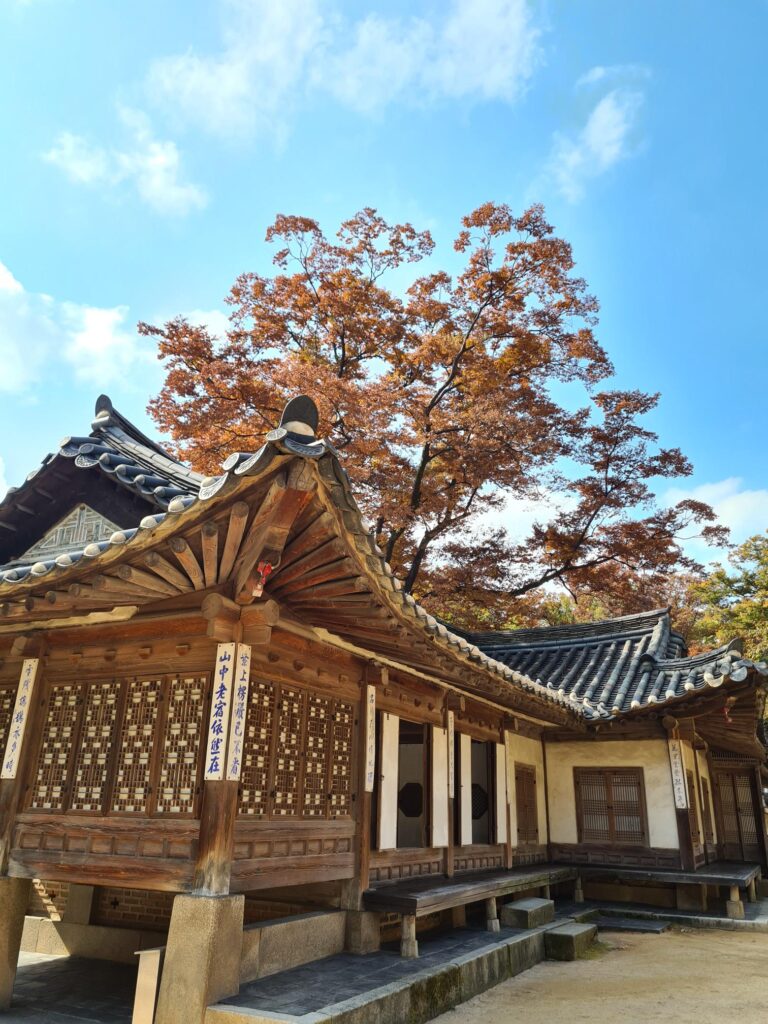
In 2023, I made one of the biggest decisions of my life: to move to Canada and pursue further studies at RRC Polytech. The travel took over 15 hours, not including layovers, but it marked the start of a new chapter in my life.
I felt excited, but I also had worries brought by the uncertainties. I remember asking myself: Did I make the right decision? Will I feel like I belong? How will I adjust to this new life?
Winnipeg felt so different from what I was used to, especially the weather! Coming from around 30°C days to below-zero winters was a big shock. But I was surprised by how quickly I found pieces of home here. I found Asian stores and restaurants. I heard familiar languages. I met people who speak Tagalog. My classmates and co-workers come from both Asian and non-Asian backgrounds, and learning and growing alongside them has been an important part of my journey.
Today, I find myself at RRC Polytech, grateful for the welcoming and inclusive environment that has helped me adjust and grow. Over the past two years, I’ve come to realize that I have found a second home that exists alongside the home I carry with me.
What We Carry with Us
My experience is just one of many. Like me, many international students and immigrants from across Asia have journeys of leaving home and building new lives. These are stories filled with both challenges and growth. While each journey is different, we all carry something deeply meaningful with us from where we come from.
Culture often lives in the quiet, familiar details of everyday moments.
It can be the comfort of a home-cooked meal. It can be switching languages when speaking with family. It can be celebrating holidays in new ways while keeping their meaning.
These moments may seem small, but they matter. They reflect the values, memories, and traditions we bring with us and continue to care for.
When asked what they carry with them, members of the RRC Polytech community shared reflections like:
Brinold Beveira, Entertainment and Media Arts – India
“Growing up in Kerala, India, Onam was always one of the happiest times of the year for me. It meant being around family, making pookalam (flower designs), wearing traditional clothes, sharing meals, and just enjoying that feeling of togetherness. Even here in Canada, I try to celebrate it with friends and the Malayali community, which makes it feel a little closer to home. It’s a reminder of where I come from and helps me hold on to that sense of belonging, even while living in Winnipeg.”
Susan Hernandez, People Services – Philippines
“There are many things I continue to carry with me since moving to Canada in 2005. Among them is the way we regularly hold family gatherings that extend beyond blood relationships. The people I met from my very first days here are still the same people I celebrate with during events and parties. I am also caring for my 79-year-old mother, who moved to Canada about ten years ago. Caring for elderly parents is a value deeply rooted in our culture, and it is something I intend to pass on to my children and future generations. We place a high value on believing in God and honoring Him as Catholics, and we help others in need – whether the support is financial or simply being present for them.”
Sang Le, student, Global Access (English for Academic & Professional Purposes) – Vietnam
“A value I carry from my Vietnamese heritage is the deep responsibility to support the people around me. In my culture, helping others is more than a kind gesture. It is a way of showing respect and staying connected as a community. Here in Canada, I continue this tradition by volunteering and offering support to newcomers and peers. This value keeps me grounded and reminds me of the community that shaped who I am.”
Saviti, student, Information Technology (Full Stack Web Development) – India
“One thing I carry with me from my Punjabi heritage is the language itself. Punjabi is warm, expressive, and full of feeling in a way no other language really matches for me. It’s how I stay connected to family back home, how I laugh with friends here, and even how I think to myself or pray in quiet moments.
There’s something really grounding about a language that holds your childhood memories, your first expressions of love, and your sense of who you are all at once. I try to keep it alive by speaking it whenever I can, listening to Punjabi music when I miss home, and appreciating that even in Winnipeg, it stays with me, a reminder of where I come from.”
Mikaela Krizzia Sitjar, Campus Store – Philippines
“One thing I carry with me from my Filipino heritage is karaoke, especially during birthdays and Christmas. Growing up, karaoke was always part of our celebrations. It did not matter how you sang, as long as everyone was having fun. Even here in Canada, I still enjoy doing karaoke with friends because it reminds me of home and brings people together. It’s a simple way I keep that fun, welcoming Filipino spirit alive.”
Hiral Soni, Centre for International Education and Global Partnerships (CIEGP) – India and Abu Dhabi, United Arab Emirates
“Being born and raised in Abu Dhabi in an Indian family, I grew up influenced by both Indian traditions at home and the diverse Middle Eastern culture around me. This blend of culture shaped my identity and taught me to be adaptable, open-minded, and comfortable in multicultural spaces from a young age. Moving to Canada, that experience has helped me settle in more easily and connect with people from different backgrounds while still staying rooted in where I come from.”
Angela Ge, Centre for Newcomer Integration – China
“One thing I carry with me from my Chinese heritage is the celebration of the Lunar New Year. It represents family reunion, hope, and new beginnings. Growing up, it meant cleaning the house, preparing special dishes, giving red envelopes, and staying up late with family. Even though I am in Canada now, I still try to keep parts of this tradition alive, whether by cooking traditional food or calling family overseas. Sometimes I also celebrate with friends here, sharing meals and stories. For me, Lunar New Year is a reminder that even across distance, family and tradition continue to stay present in my life.”
Lee Maria Mathews, People Services – India
“I come from a Christian family in Kerala, India, where Holy Week is a deeply meaningful and sacred time for us. During this week, we prepare traditional foods like Pesaha appam, Inri appam (a traditional unleavened bread) and a special sweet milk dish – recipes passed down through generations and rooted in the remembrance of Jesus Last Supper. In my family, this meal is traditionally served by the elder male members and shared together as a symbol of unity, faith, and love. What makes it even more special is that we don’t keep it within our home – we share it with friends and neighbours as part of the celebration. Even in Canada, I continue this tradition every year, cooking and sharing it with my family and friends, keeping my heritage alive across borders.”
Marion Queen Ramos, student, Applied Computer Education (ACE) – Philippines
“I carry ‘bayanihan’ with me into every space I enter. This is a Filipino value rooted in shared burdens, quiet generosity, and the kind of unity that asks nothing in return. It’s how I was raised. In a family shaped by public service, showing up for others wasn’t a choice; it was instinct. I learned early how to read a room, to ease tension, to reach across divides and build something whole out of what felt disconnected.
When I came to Canada, I felt the weight of the distance between people, the silos, the quiet separation. It didn’t sit right with me. So, I chose to step forward, again and again, into spaces where connection felt missing. I placed myself where I could listen, hold space, and bring people together, not loudly, but intentionally. Because I believe community isn’t something we find; it’s something we create. And wherever I go, I try to leave that light behind.”
Kate Cong, People Services – China and Vietnam
“Celebrating Tet is a cornerstone of my Chinese-Vietnamese heritage that I am passionate about passing down to my children. Beyond the festive decorations, traditional meals, and the beauty of our cultural clothing, it is a time for us to honour our ancestors and reflect on the values of gratitude and family unity. I love seeing my children’s excitement over receiving red envelopes (filled with money!), as exposing my them to these customs helps them build a strong sense of identity and pride in their background. It ensures that our cultural history remains a living, joyful part of their lives in Canada. It is important to me that they carry these lessons of respect and celebration into their own lives as they grow.”
Mary Katherine “Kath” Ong, Simulation Centre, School of Health Sciences and Community Services – Philippines
“Something meaningful that I carry with me as a Filipino living in Canada is the joy and spirit of Filipino gatherings, especially during birthdays and holidays. In our Filipino culture, celebrations are never just about the occasion, they’re about bringing people together, sharing food, laughter and creating a warm welcoming space for everyone. Even being far from the Philippines, I keep this tradition alive by hosting gatherings with family and friends, preparing familiar dishes, and making sure that no one leaves without feeling included and cared for. Whether it’s a simple get together or a bigger holiday like Christmas, I try to recreate that same lively and heartfelt atmosphere I grew up with and I make sure that my kids will experience the same joy. It’s my way of holding on to my roots and passing on the joy of Filipino culture, even while building a life here in Canada. These celebrations remind me of the importance of connection and gratitude and one of many ways to teach my kids.”
Hansani Shashiprabha, Life Sciences – Sri Lanka
“One tradition I carry with me from Sri Lanka is the celebration of Sinhala and Tamil New Year, which marks a time of renewal, gratitude, and togetherness. Growing up, this celebration meant preparing traditional foods, wearing new clothes, and spending time with family and neighbors. Even in Canada, I try to honour the New Year by cooking traditional dishes and taking a moment to reflect and reset. Celebrating this tradition helps me stay connected to both my culture and the values of harmony and community.”
Ting Ting, Corporate Solutions – Mainland China
“I carry with me the Chinese belief that “reading ten thousand books is not as valuable as traveling ten thousand miles.” Whenever I enter a new environment, I prefer to observe, experience, and learn how people live before expressing my opinions. To me, respecting a culture means first understanding its daily rhythms, unspoken norms, and ways of life rather than speaking too quickly. This approach may sometimes make me seem quiet or reserved, but it comes from a place of humility and a desire to learn deeply. I keep this value alive by staying curious, observing carefully, and appreciating the human and cultural details that cannot be found in books.
We may seem quiet at first, but if we go out for a chat or a meal, you’ll soon discover how talkative and friendly we can be.”
Prachi Thakur, student, Disability and Community Support – India
“One of the most meaningful parts of my heritage from Punjab, India is the tradition of langar- a communal meal where everyone sits side by side, regardless of status, and shares the same food. It embodies humility, equality, and quiet generosity, values that have shaped how I see the world. Living in Canada, I carry this forward by cooking Punjabi meals, inviting friends to gather, and creating spaces where people feel welcomed and included. In those moments of sharing, I’m reminded that home isn’t just a place, it’s something you build through connection, wherever you are.”
Del Pelagio, Facility Management – Philippines
“There is a word in the Filipino language that has no direct English translation, yet carries profound meaning: bayanihan. It embodies the spirit of community, unity, and shared purpose. People coming together to help one another, especially in times of need, without expecting anything in return. It is both an act of kindness and a reflection of collective strength. More than a tradition, it is at the very core of what it means to be Filipino, a value that lives within us all, no matter where we are in the world.”
Janine Bucklaschuk, Centre for Learning and Program Excellence (CLPE) – Philippines
“I carry with me the language and the traditions of my home, which can be understood in the lens of Kapwa Psychology. Learning and re-learning the Filipino language (1987 Constitution), we see that language shapes us and our views of the world. Kapwa, as a value, emphasizes the need for community and connection, and it is the reason why I invite fellow Filipinos to reconnect with our culture. We have a shared identity and we are stronger when we foster deep empathy and cohesion within our community.”
Yadveer Kaur Brar, student, IT Operations (Applied Computer Education) – India
“My Asian heritage has given me three things I carry with me every day in Canada: courage, perseverance, and hard work. These values come from my family and from growing up in India, where I learned that no matter where you go in the world, you thrive when you remember who you are. They remind me to stay grounded, to keep moving forward, and to honour the sacrifices that brought me here. I keep these values alive through my work, my community involvement, and the way I show up for others. For me, they are a constant reminder that identity is not something you leave behind – it’s something you carry with pride.”
Hung Hao Yu, Red River College Students’ Association – Taiwan and China
“Chinese heritage in Canada dates back to 1788, when a group of Chinese workers came to British Columbia to help build a trading post. In 1858, the first Chinese community was established. Beginning in 1880, many Chinese labourers helped build the Canadian Pacific Railway. However, Chinese people were the only group in Canadian history to be subjected to an ‘entry’ or ‘head’ tax, beginning in 1885. The Chinese Exclusion Act was enacted in 1923 and remained in effect until it was repealed in 1947. Personally, working with my former boss, MLA Chen, to witness the passing of Manitoba’s Asian Heritage Act means a great deal to me and will remain a cherished memory forever.
For me, connecting with the traces of my ancestors’ lives and hard work, celebrating Lunar New Year gatherings, eating dumplings, giving red envelopes as blessings, visiting historic cultural centres and old Chinese restaurants in Chinatowns across Canadian cities, and remembering the spirit of enduring hardship, perseverance, and quiet dedication all remind me of my parents and relatives far away in Asia.”
Linda Pan, student, Global Access (English for Academic & Professional Purposes) – China
“One thing I carry with me from my Chinese heritage is the deep bond and warmth of family relationships, which I find truly priceless. No matter whether I am in my home country or here in Canada, I want to preserve and pass down this sense of connection and togetherness. In my daily life, I keep this alive by having regular video calls with my family back home and creating a cozy, welcoming atmosphere for friends here. For me, carrying this value helps me build a warm “home away from home” in Canada.”
Long Cheng, student, Global Access (English for Academic & Professional Purposes) – China
“I’m from Shandong, China. During the Spring Festival, we prepare a lot of dishes and eat dumplings.”
Jiaojiao Shen (Joy), student, Global Access (English for Academic & Professional Purposes) – China
“I come from Xinchang, Zhejiang Province, China. Xinchang is a small city with a long history, beautiful mountains, and many traditional foods. Since I came to Canada, I have thought more about my cultural background and the traditions that are important to me. Although I am living in a different country now, I have still kept many parts of my Asian heritage in my daily life.
One special part of my hometown culture is the traditional food. When I was young, my family often made taro dumplings during festivals and family gatherings. These dumplings were different from regular dumplings because the wrapper was made from taro instead of flour. They had a soft texture and a unique flavor. My hometown is also famous for rice cakes made from fresh rice. In the past, my grandparents sometimes made these rice cakes by hand, and I watched them carefully when I was a child. These foods were not only delicious, but they also connected our family together.
Another important place in Xinchang is the Big Buddha Temple. Many local people have visited this temple for generations. I visited it several times with my family when I was younger. The temple has a peaceful atmosphere, and it represents part of our local history and culture. Xinchang is also famous for Chuanyan Shijiufeng, which is a beautiful mountain area. During the Double Ninth Festival, people traditionally climbed mountains to enjoy distant views and wish for good fortune. When I was young, my family sometimes went hiking there together during the festival holidays. We climbed to high places and looked far into the distance, which made us feel peaceful and connected to nature.
Since I have come to Canada, I have experienced a multicultural environment. People from many countries live here, and everyone has different traditions, languages, and foods. I think this diversity is very meaningful because people can learn from each other and respect different cultures. At the same time, living in Canada has made me value my own culture even more.
Even though I am far away from my hometown now, I have continued to keep some Chinese traditions in my life. I still cook Chinese food, celebrate traditional festivals, and share stories about my hometown with other people. Food has become an emotional connection between me and my family. When I cook the dishes that I ate in Zhejiang, I remember my childhood and the time I spent with my family. These traditions have helped me feel connected to my roots while adapting to life in Canada.
I believe cultural heritage is important because it reminds people where they come from. In the future, I hope I can continue to share my culture with others and keep these traditions in my life.”
You-An Su, student, Global Access (English for Academic & Professional Purposes) – Taiwan
“One thing I carry with me from my country is the Mid-Autumn Festival. It is very meaningful to me. On this special day, my family and I usually buy barbecue ingredients and sweet mooncakes to celebrate together. Having a barbecue during the Mid-Autumn Festival has become a common tradition among Taiwanese people. What makes this festival special is the atmosphere. If you drive around the neighborhood that evening, you can smell barbecue coming from almost every house. The entire city feels warm, lively, and full of happiness. This tradition reminds me of home and brings back many childhood memories.”
Jiayu Li, student, Global Access (English for Academic & Professional Purposes) – China
“One meaningful part of my Asian heritage that I keep in Canada is the Spring Festival, also known as Chinese New Year. It is the most important traditional celebration for my family, standing for reunion, joy and good wishes. Even far away from my hometown, we still stick to old traditions. We make dumplings together, hang Spring Festival couplets and have a big family dinner on New Year’s Eve. When the Spring Festival arrives, we will receive many red envelopes which filled with lucky money from our elders. I love carrying on these customs because they bring me warmth and a sense of belonging no matter where I live.”
Ngoc Hoai Thuong Nguyen, student, Global Access (English for Academic & Professional Purposes) – Vietnam
“One meaningful part of my Viet Nam heritage that I carry with me is the tradition of making Vietnamese food. In Canada, I continue to cook this meal because the familiar aromas remind me of my family gatherings back home. It is important to me because it provides a sense of comfort and keeps my cultural roots alive during my daily life in Winnipeg.”
Together, these experiences show that heritage is not only something we inherit or define by distance or borders, but something we carry, live and share every day. At RRC Polytech, these stories come together to form a diverse community. There is no single way to define Asian identity, and that is what makes diversity meaningful.
Community and Connection
Throughout Asian Heritage Month, events and initiatives create opportunities to bring people together, to connect, learn, and celebrate Asian cultures and heritage across communities.
From film festivals and exhibitions to performances and community gatherings, these moments create space for stories to be shared, identities to be seen, and connections to grow.
As we celebrate this month, these gatherings remind us that heritage is not only something we carry within us, but something we also share with others.
]]>This year, Yom HaShoah starts on the evening of April 13 and continues to the evening of April 14.
On April 14, the Jewish Federation of Winnipeg will hold the Annual Public Holocaust Commemoration from 11:45 am to 12:45 pm. All are welcome to attend. Register for the commemoration event here.
RRC Polytech will lower its flags in observance of Yom HaShoah.
]]>
Every year on the second Wednesday in April – this year on April 8, 2026 – we recognize the International Day of Pink. On this day, people wear pink to stand against bullying, discrimination, and hate. Wearing pink is a visible commitment to equality, acceptance, and kindness. It is a simple but powerful way to support a more inclusive and respectful world.
This year’s theme is ECHO. It focuses on the voices of people who have spoken up, stood strong, and created change. The theme reminds us not only to stand up, but also to listen. It calls on us to hear the voices of 2SLGBTQIA+ communities who have shared their stories, expressed themselves openly, and helped reshape society.
At RRC Polytech, we stand as allies in support of this day and the 2SLGBTQIA+ community. International Day of Pink is a time to recognize their courage and the impact they continue to have. Their actions create change that carries forward, helping to challenge harmful ideas and support others.
On this day, we are encouraged to choose love over hate. While progress has been made, it will not last without ongoing effort. We all have a role to play. This includes learning from the past, educating others, speaking up, and taking real action to support equity and inclusion.
To learn more about this year’s theme, watch Day of Pink 2026: ECHO/Journée rose 2026: ÉCHO and visit the International Day of Pink website for resources.
]]>The celebration of Easter follows the end of Lent, a period of fasting, prayer and purification. Easter’s message of unity and generosity offers a meaningful reminder to support those in need. By embracing compassion and inclusion, we help strengthen the ties that bring us together.
Orthodox Holy Week 2026 runs from Palm Sunday, April 5, through Holy Saturday, April 11, culminating in Holy Pascha (Easter) on Sunday, April 12.
Wishing everyone who celebrates a happy Easter!
]]>This sacred holiday is celebrated with Seder feasts of traditional and symbolic foods, like matzah (an unleavened bread) and bitter herbs, the re-telling of the Exodus story and prayer. This holiday holds profound significance and a reminder of resilience and hope. It is a time to reflect on the enduring spirit of the Jewish people.
At RRC Polytech, diversity is one of our greatest strengths. The Polytech is home to thousands of employees and students from all different backgrounds – including those from the Jewish community.
Chag Pesach Sameach (Happy Passover) to all staff, faculty and students who celebrate this holiday! May this celebration hold joyous times for you and your families.
]]>