Students from RRC Polytech’s IT programs are seeking full-time employer-paid co-op opportunities from September 1 to December 18, 2026. These programs are Application Development & Delivery and Full Stack Web Development, though we also have a small number of Business Information Technology, Data Science & Machine Learning, and IT Operations students.
Students have the skills and job readiness to act as: software developers, front- and back-end web developers, web designers or developers, full stack developers, Java developers, web application business analysts, IT services support, help desk associates, network administrators, and more.
If you’re interested in hiring a co-op student or exploring if co-op is a fit for your organization, please reach out to our Industry Liaison Consultant today: you can reach Katie at ACEwil@rrc.ca
Important Dates
Work term start date: September 1, 2026
Post to Career Bridge: now – late July
Deadline to extend an offer to students: August 7, 2026*
* The deadline aligns with the ACE Project Space industry project deadline. Most students will not be available for co-op jobs after this deadline
Potential Funding Opportunities
Employers may be eligible for wage funding or subsidies through Student Work Placement Program (SWPP) (domestic/permanent resident students only) and/or Manitoba Work Experience Tax Credits (all students). College staff are happy to discuss these options with you.
New to co-ops?
Co-ops are a form of work-integrated learning that integrates academic studies with quality experiences. They are an engaged partnership between RRC Polytech, an employer-organization, and a student.
The process of hiring a co-op student mirrors a regular job search with added support from College staff and potential funding opportunities to assist with paying students a fair wage (an average of $18-$22/hour for IT programs). Job postings, aligned to the program requirements, are posted on Career Bridge up to four months prior to the start of the work term. By indicating that the role is for a particular co-op term, only students who are approved for the work term will see your job posting.
More information on co-ops can be found through the following links:
Safety Terms and Conditions for Work-Integrated Learning Employers
]]>To mark the occasion, we are thrilled to celebrate the winner and runner-up of the RRC Polytech Co-op Student of the Year Award for 2025. These awards recognize two students who demonstrated exceptional growth, leadership, and impact around work experiences both on and off their work terms.
Winner: Wade Robbins
This year’s winner, Wade, utilized his time in the Civil Engineering Technology program to become a true champion for the industry. His initiative to improve WIL extended beyond RRC Polytech as he spent time with the Crocus Plains High School Design Drafting program in Brandon, sharing the value of hands-on experience and encouraging students to pursue careers in building design and construction.
While working with Samson Engineering Inc., Wade thrived under tight deadlines, mastering new 3D rendering software to deliver high-quality results. He then brought these advanced design skills back to the classroom to mentor his peers in the program. Wade’s experience solidified his career path, and he is already planning to build upon his Civil Engineering Technology foundation through RRC Polytech micro-credentials in Revit and AutoCAD.
Runner-Up: Brandi Soloway
During Brandi’s co-op with Pier Solutions, she applied her Civil Engineering Technology studies to take the lead on the company’s expansion drawings, leaving a lasting mark on her employer’s operations.
Brandi chose to push herself by selecting a placement that was outside of her immediate comfort zone. This demonstrated a deep dedication to self-improvement, lifelong learning, and a desire to bridge the gap between her classroom theory and professional industry practice.
]]>In today’s rapidly evolving industrial landscape, companies need more than graduates who understand technology—they need emerging technologists who can build, troubleshoot, and optimize complex systems from Day 1.
That’s exactly what the Instrumentation & Control Engineering Technology (ICET) program at RRC Polytech is designed to deliver. Our mission is simple:
Connect engineering theory with industrial reality – and prepare students to thrive in the field.
Through immersive labs, real‑world projects, and intensive hands-on training, our students become the technologists who keep industries running safely, efficiently, and automatically.
Why Partner with ICET Co‑op?
Because our students do far more than learn concepts – they apply them. They become the bridge between mechanical processes and digital control systems, ensuring that complex industrial operations run smoothly and reliably.
If your organization relies on precise measurement, modern automation, or integrated control systems, our co‑op talent is ready to contribute immediately.
What ICET Students Bring to Your Team
1. Precision in Process Measurement & Calibration
Behind every safe and stable process is accurate measurement. ICET students train extensively on real industrial instrumentation, including:
- Primary Sensing Elements: Level, pressure, temperature, and flow transmitters—configured, troubleshot, and validated.
- Analytical Equipment: Experience with environmental analyzers and complex sampling systems.
- Calibration Expertise: Bench and field calibration of industrial sensors to maintain process integrity.
2. Advanced Automation & Robotics Expertise
Modern industry demands modern control solutions. Our students learn to design, program, and maintain sophisticated automation platforms:
- PLC Programming (IEC 61131‑3) using Ladder, FBD, and SFC for Allen‑Bradley and Siemens systems.
- Robotics & Drives: Programming robotic arms and drones; configuring VSDs for 3‑phase motor control.
- HMI & DCS Development: Creating intuitive operator interfaces with FactoryTalk View and configuring distributed systems.
Your co‑op student won’t just understand automation – they’ll help you elevate it.
3. Industrial Networking & System Design
Today’s plants run on data. Our students ensure equipment speaks a common language and works as an integrated whole. Their training includes:
- Communication Protocols: Modbus, HART, Ethernet/IP, RS485.
- LabVIEW & DAQ: Virtual instrumentation, strain gauge conditioning, FFT spectral analysis.
- Engineering Documentation: Clean, professional Piping and Instrumentation Diagrams (P&ID), loop drawings, and I/O lists.
- Advanced Control Theory: PID tuning, cascade and feed-forward control, Laplace analysis, stability evaluation.
4. Mechanical & Thermal Engineering Foundations
Instrumentation technologists must understand the physical systems they control. ICET students learn:
- Fluid Mechanics: Real-world pneumatic, hydraulic, and process fluid systems.
- Thermodynamics: Heat transfer analysis and energy-efficient system operation.
- Electrical Safety & Code: Application of Canadian Electrical Code requirements, including Class 1 & Class 2 circuits.
This knowledge ensures their decisions are grounded in practical engineering reality.
The Co‑op Advantage: Ready to Work on Day One
ICET co‑op students are prepared to support your team immediately with:
| Competency | How It Benefits Your Operation |
| IEC 61131‑3 Standards | Ensures automation code is future‑proof and serviceable |
| Numerical Methods | Supports modeling, analysis, and optimization tasks |
| Project Lifecycle Experience | Contributes to design, commissioning, and maintenance workflows |
| Safety & Ethics Training | Promotes reliable, safety‑driven decision making |
Ideal Placement Roles
- Instrumentation Technician / Apprentice
- Junior Automation Designer
- Process Control Intern
- DCS/SCADA Support Technician
- Technical Sales or Estimating Support
A Partnership Built on Support and Flexibility
When you hire an ICET co‑op student, you’re not just getting talent – you’re getting a partner. We provide:
 Single-Point Coordinator Support
For scheduling, feedback, and recruitment.
Custom Student Matching
We help identify candidates with the precise skills your projects require.
Flexible Co‑op Terms
We offer placement durations that align with industry timelines and seasonal demands.
Let’s Build the Future of Automation Together
By partnering with RRC Polytech’s ICET co‑op program, you gain access to highly skilled, motivated technologists who are ready to contribute immediately – and grow into future leaders in instrumentation and control.
If you’re ready to strengthen your workforce with “Day 1 ready” talent, we’re excited to collaborate.
]]>Modern industry demands electrical technologists who can think critically, work safely, and contribute immediately to real‑world engineering challenges. The Electrical Engineering Technology (EET) program at RRC Polytech builds exactly that kind of talent.
By the time students reach their co‑op terms, they have completed extensive hands‑on lab training, developed strong analytical foundations, and learned to apply industry‑standard tools with confidence. These students arrive prepared, safety‑certified, and ready to add value from day one.
Whether you need support in automation, power systems, drafting, testing, design, or field work, EET students offer reliable, technically grounded assistance during busy seasons or project cycles.
Why Hire an Electrical Engineering Technology Co-op Student?
Immediate Productivity
All students enter their co‑op terms with:
- WHMIS certification
- General Safety Training (GST)
- Significant lab hours working with real electrical systems
Technical Versatility
Their training spans:
- Power systems
- PLC programming
- Motor control
- Digital logic
- Semiconductor analysis
- Drafting and documentation
A Rigorous Analytical Foundation
With coursework in:
- Calculus
- Physics
- Circuit theory
They understand the principles behind every system they work on – not just the procedures.
Student Skill Sets by Specialty
1. Industrial Automation & Control
EET students are trained to support modern automated processes with real, hands-on experience.
PLC Programming & Troubleshooting
- Allen-Bradley PLCs
- PID control
- Encoders, analog I/O, interlocks
Motor Control Systems
- AC/DC motor starters
- Variable Frequency Drives (VFDs)
- Soft starters
- Overload protection
HMI & Industrial Networking
- Basic Human-Machine Interface development
- RS232, RS485 communication
- LAN architecture fundamentals
These students are ideal for facilities applying automation or improving process reliability.
2. Power Systems & Electrical Design
Students gain strong fundamentals in power distribution, design, and system maintenance.
Power Quality & Protection
- Harmonics
- Power factor correction
- Surge protection (MOVs, snubbers)
Design & Drafting Tools
- Solid Edge
- MultiSim
- Microsoft Visio
- Schematic creation and interpretation
- Wiring diagram development
Canadian Electrical Code (CEC) Awareness
- Conductor sizing
- Grounding and bonding requirements
- Safe installation practices
Students can assist electrical engineers, designers, or maintenance teams with accurate, code-informed work.
3. Electronics & Embedded Systems
With strong circuit fundamentals, students can assist with prototype development, testing, and troubleshooting.
Prototyping Skills
- Soldering and component replacement
- Breadboarding
- Use of oscilloscopes and multimeters
Programming Foundations
- Introductory C programming
- Microcontroller interfacing
- Basic firmware tasking
Circuit Analysis
- DC/AC theorems
- Transient response
- Semiconductor device operation
These students integrate seamlessly into electronics labs, R&D teams, and testing environments.
The Co‑op Advantage: Ready to Work on Day One
ICET co‑op students are prepared to support your team immediately with:
| Competency | How It Benefits Your Operation |
| IEC 61131‑3 Standards | Ensures automation code is future‑proof and serviceable |
| Numerical Methods | Supports modeling, analysis, and optimization tasks |
| Project Lifecycle Experience | Contributes to design, commissioning, and maintenance workflows |
| Safety & Ethics Training | Promotes reliable, safety‑driven decision making |
Ideal Placement Roles
- Instrumentation Technician / Apprentice
- Junior Automation Designer
- Process Control Intern
- DCS/SCADA Support Technician
- Technical Sales or Estimating Support
A Partnership Built on Support and Flexibility
When you hire an ICET co‑op student, you’re not just getting talent – you’re getting a partner. We provide:
Single-Point Coordinator Support
For scheduling, feedback, and recruitment.
Custom Student Matching
We help identify candidates with the precise skills your projects require.
Flexible Co‑op Terms
We offer placement durations that align with industry timelines and seasonal demands.
Building the Future of Electrical Engineering Together
By partnering with RRC Polytech’s Electrical Engineering Technology (EET) co‑op program, you gain access to highly skilled, motivated technologists who are prepared to contribute from day one—and who have the potential to grow into future leaders in the electrical industry.
If you’re ready to strengthen your workforce with job‑ready, technically grounded talent, we look forward to collaborating with you.
]]>Today’s electronic systems must be smarter, faster, and more reliable than ever. To stay competitive, organizations need team members who can learn quickly, think critically, and contribute both creatively and technically.
RRC Polytech’s 2nd year Electronic Engineering Technology (EET) students are trained to do exactly that. With hands-on experience, strong engineering foundations, and a practical design‑to‑deployment skillset, they offer immediate value to companies developing embedded systems, digital hardware, industrial electronics, networked devices, communication systems, and more.
Whether you need support in design, testing, prototyping, production, field work, or documentation, EET students are ready to contribute as co‑op hires or junior technical assistants.
Core Technical Strengths
1. Embedded Systems & Hardware Design
EET students turn theoretical concepts into working devices. They are trained in:
Microcontroller Integration
- C programming for embedded processors
- Interfacing with LCD modules, matrix keypads, and hardware interrupts
- Working with external sensors and digital/analog peripherals
PCB Design & Manufacturing
- High-speed PCB layout
- Switching power supply design
- Component footprint creation
- Design-for-manufacturability and troubleshooting
Digital Logic Systems (VHDL)
- Building finite state machines
- Implementing UART and serial communication blocks
- Designing digital subsystems using Altera Quartus II
Students graduate with hands-on prototyping experience that directly supports product development and R&D environments.
2. Digital Communications & Networking
Students understand the infrastructure behind today’s connected technologies.
Routing & Switching
- Cisco router and switch configuration
- VLAN creation
- IEEE 802.1Q trunking
- Basic network security hardening
Communication Protocols
- RS232, RS485
- Fiber optics
- LAN/WAN communication system design
Signal Processing
- Sampling and filtering
- FFT analysis
- z‑transform applications
This training prepares them to support secure, reliable device communication and industrial networking projects.
3. Industrial Electronics & Control
EET students bring strong practical understanding of electronics used in automation and manufacturing.
Analog Circuitry
- Filters, timers, and oscillators
- Linear and switching power supplies
- Signal generation and conditioning
Sensors & Transducers
- Optoelectronics
- Temperature and speed sensors
- Electronic triggering devices
Control Systems
- Transfer function development
- System stability analysis
- PID controller tuning using Laplace-based methods
They are well-equipped to support R&D labs, production testing, and industrial electronics teams.
4. Specialized Electives That Add Value
Depending on elective choices, students may bring additional capabilities in:
Biomedical and Wireless Communication
- X‑ray and ultrasound fundamentals
- Medical sensor circuits
- 802.11 Wireless LAN engineering, including site surveys and link budgeting
Electronic Measurement & High-Frequency Analysis
- Impedance matching
- Use of high-frequency instruments
- RF troubleshooting
These electives make students adaptable to a wide range of specialized technical environments.
Why Employers Value EET Co‑op Students
1. Quick Integration into Technical Teams
With a prior co‑op term and extensive lab experience, students understand discipline-specific:
- Documentation
- Safety practices
- Engineering workflows
- Project cycles
2. True Design‑to‑Build Competence
They can:
- Model and simulate designs
- Build prototypes
- Debug hardware at the bench
- Support testing and validation
3. Awareness of Network and Security Requirements
Their Cisco‑based training means the devices they produce are:
- Configured correctly
- Secure
- Integration-ready
4. Data-Driven Thinking
Through Quality Assurance and Statistics courses, students apply:
- Probability
- Linear regression
- Statistical testingTo guide decisions and verify system performance.
5. Strong Technical Communication
With three levels of Technical Communications training, students produce:
- Engineering reports
- Project charters
- Test documentation
- Design specifications
This reduces onboarding time and improves workflow clarity for technical teams.
How RRC Polytech Supports Employers
Employers partnering with the EET co‑op program receive:
- Coordinator support for scheduling and placement logistics
- Student matching to align skills with your project needs
- Flexible co‑op timing to fit seasonal or project-based workloads
- Access to motivated talent prepared for real engineering responsibilities
Start Building Your Future Engineering Talent Pipeline
Second-year Electronic Engineering Technology students are ready to assist with embedded systems, hardware design, automation, networking, communications, industrial electronics, and R&D.
]]>Industries across Manitoba are innovating faster than ever – and they need emerging talent who are curious, hardworking, and ready to learn. That’s where Mechanical Engineering Technology (MET) students from RRC Polytech come in.
Our students bring strong technical foundations, hands‑on aptitude, and a willingness to dive into real industry environments. For many employers, they offer an ideal blend of developing skills and fresh enthusiasm.
If your organization needs mechanically minded support on the shop floor, in facilities, or in field work settings, our MET students are ready to contribute.
Why Partner with RRC Polytech’s MET Co‑op Program?
Because you’ll gain access to motivated students who:
- Are trained in the fundamentals of mechanical systems, tools, safety, and materials
- Understand how industrial environments operate
- Bring strong problem‑solving and technical curiosity
- Are eager to gain hands‑on experience and support real projects
These placements help students build confidence and industry familiarity – and help employers get reliable support during busy seasons or ongoing operations.
Where MET Students Add Value
Please refer to this website to view the full list of skills and aptitudes that our MET students possess: Mechanical Engineering Technology – Objectives & Learning Outcomes
For a quick guide for our student skills that they possess after first and second year programming:
First Year MET Students:
• Design according to proper drafting protocols (ANSI, ISO and GD&T) and views (3rd angle projection, isometric, oblique)
• Use AutoCAD and Solid Edge
• Use work instructions and shop orders in a lean manufacturing environment
• Fabricate using CNC mill/lathe
• Complete various technical writing tasks (including reports, memos, letters, emails, proposals, instructions, presentations and spreadsheets)
• Complete labour, factory and administration tasks
Second Year MET Students (first-year skills plus…) :
• HVAC, Instrumentation, CAD (Unigraphics, PTC Creo)
• Hydraulics (Automation Studio)
• Complete advanced fabrication and documentation package, including BOMs
• Project Management
• Applied Mechanics, Strength of Materials, Machine Design
Below are the roles and job titles that are ideal for MET co‑op students and fully aligned with their training and readiness.
Design & Drafting
- Mechanical Designer
- CAD Technologist
- Product Design Technologist
- Drafting Technologist
Manufacturing & Production
- Production Technician
- Process Improvement Technologist
- Tooling Technologist
- Industrial Engineering Technologist
- Manufacturing Technologist
Testing, QA & Prototyping
- Testing and Validation Technologist
- Quality Control / Quality Assurance Technologist
Maintenance & Operations
- Maintenance Engineering Technologist
- Mechanical Systems Technician
- Field Service Technologist
Project & Technical Support
- Project Engineering Technologist
- Technical Support Specialist
- Engineering Lab Technologist
- Technical Sales (Mechanical/Industrial Products)
Upon completion of the program, students will have experience using a wide variety of industry-standard software such as:
- AutoCAD
- Autodesk Fusion
- Autodesk Inventor with Nastran
- Revit
- Autodesk Vault
- CATIA
- Creo
- Siemens NX
- Solid Edge
- SOLIDWORKS
- MATLAB
- PTC Mathcad
- Arduino
- Connected Components Workbench (Rockwell Automation)
- easySoft (Eaton)
- E-Z-MRP
- Microsoft: Excel, PowerPoint, Word
- Microsoft Project
- Microsoft Visio
The MET Co‑op Advantage: A Foundation You Can Build On
When you bring a MET Year 1 student onto your team, you gain:
- Reliable entry‑level mechanical support – perfect for busy seasons, maintenance windows, or project surges.
- A motivated learner who grows throughout the placement – many employers continue to hire MET students in future years as their skills deepen.
- Early access to future technologists – today’s helper can become your next draftsperson, designer, engineering technologist, or field specialist.
Our Commitment to Industry Partners
RRC Polytech ensures a smooth, supportive co‑op experience by offering:
Coordinator Support – a single point of contact for scheduling, paperwork, and performance check‑ins.
Student Matching – we help match students to roles that fit your operational needs.
Flexible Placement Timelines – we work with your seasonal cycles, shutdowns, or project‑based scheduling.
Ready to Build Your Workforce of Tomorrow?
Partnering with the MET co‑op program means gaining access to reliable, eager, mechanically minded students while helping shape Manitoba’s next generation of engineering technologists.
]]>Check out these events and celebrate National Work-Integrated Learning (WIL) Month 2026 with us!
Co-operative Education and Work-Integrated Learning Canada (CEWIL Canada) is the leading organization for Work-Integrated Learning in Canada. CEWIL partners with post-secondary institutions, community members, employers, government, and students to champion Work-Integrated Learning (WIL).
Each year, on the 4th Wednesday of March, we are pleased to celebrate the National Day of WIL with CEWIL!
This year the National Day of WIL is Wednesday, March 25, 2026.
Students are invited to explore these events happening during National WIL Month.
- Mar 3 – Employer On-Campus: Hydro One (NDC)
- Electrical Engineering Technology, Instrumentation & Control Engineering Technology
- Mar 4 – Employer On-Campus: Hydro One (EDC)
- Electrical Engineering Technology, Instrumentation & Control Engineering Technology
- Mar 5 – Directions Business Conference
- Business and Applied Arts
- Mar 10 – Entry-Level Careers in Tax Accounting
- Business Administration – Accounting and Applied Accounting
- Mar 23 – Hospitality Insider Exchange
- Culinary Arts, Professional Baking and Hospitality Business Management
- Mar 23 – Flynn Lunch and Learn
- Architectural/ Environmental/ Municipal/ Structural Engineering Technology, Civil Engineering Technology, Construction Management, and Geomatics Technology
- Mar 25 – Indigenous Career Fair
- Mar 25 – National Day of WIL
If you have any questions about these events, please contact WIL@rrc.ca or careerservices@rrc.ca
]]>Spring is just around the corner, and our 2026 Mechanical and Electrical Engineering Technology co-op students will soon be seeking placements – an opportunity to add motivated, emerging talent and new perspectives to your team.
Mechanical Engineering Year 1, Electrical Engineering Technology (EET) Year 1, and Year 2 students are currently seeking full-time, paid co-op placements for a four-month term (16 weeks | 450 hours) running from May 4 to August 21, 2026.
To learn more about each co‑op program, select any of the links provided below.
Mechanical Engineering Technology Year 1
Electrical Engineering Technology Year 2 & Year 3
Electronic Engineering Technology Year 2
Instrumentation and Control Engineering Technology Year 2
Employers who host co-ops may be eligible for wage subsidies through the Student Work Placement Program (SWPP) or through Manitoba Work Experience Tax Credits.
If interested:
- Register on Career Bridge. If you are not already registered, create an account on RRC Polytech’s job portal.
- Share your Co-op opportunity. Post directly on Career Bridge or share the position by e-mail – we can post the opportunity on your behalf.
- Confirm program fit. Our WIL Coordinator will work with your organization to ensure the opportunity aligns with program requirements or with another program.
- Student applications. Once approved, students may apply directly through your website, or an application package will be sent to you by e-mail after the deadline
For additional questions or to learn more about hosting a Spring 2026 Mechanical or Electrical Engineering Technology co-op student, please contact us at WIL@rrc.ca
]]>Read all about how Stan represented both RRC Polytech and Canada on the international stage — and how his “Work-Integrated Learning” experience turned into a once-in-a-lifetime culinary adventure.
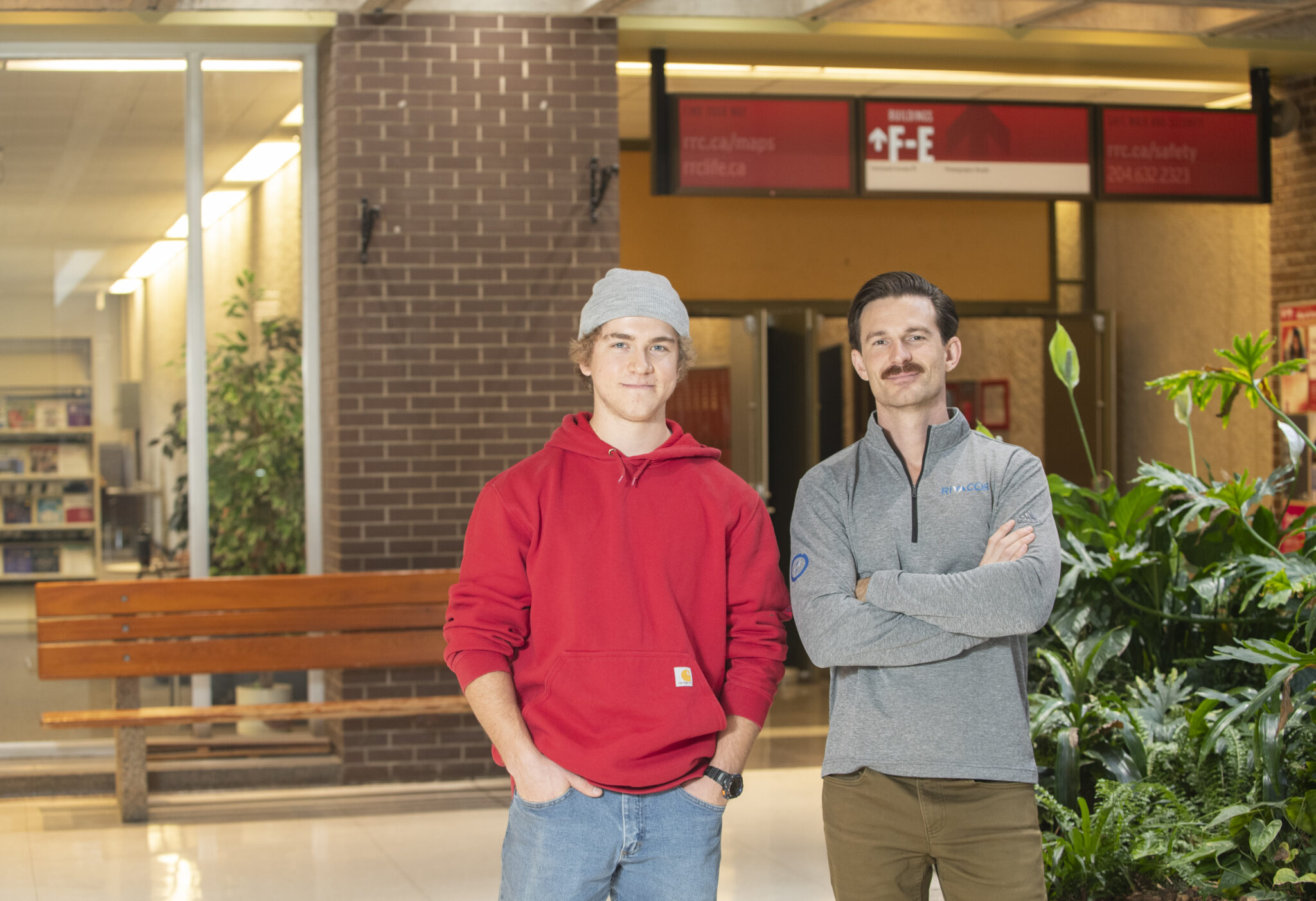
]]>
A career in surveying can take someone to an exciting variety of job sites — from rural to urban, populated to remote.
That’s where Colin Rivard started after graduating from the Civil Engineering Technology program, specializing in Geomatics, at RRC Polytech in 2012. With an entrepreneurial background, though, there was always a desire to build something of his own.
“My dad and his dad started a small business together. I saw how they got to see the tangible efforts of what you put into owning a business. There’s a direct correlation to the harder you work, the more benefit there is. I’ve always liked that.”
In 2018, Rivard founded RivaCore Surveys and Locates as a one-person operation, and since then he’s adapted his focus to building the ideal team and overseeing a period of fast expansion.
“Starting in the field, you just get a love for surveying and being by yourself with an instrument,” said Rivard. “The biggest thing that drives me now, though, is being able to work with a team that we’ve really developed over the years.”
Just last year, RivaCore had a small team of eight — today, they’ve grown to a staff of 23, with at least five more coming on for long-term projects before the end of 2025.
RivaCore, which provides services including pipeline, construction, topographic, heavy civil surveys and beyond, hasn’t just grown in numbers — it’s grown in reputation as well. The organization has clients across multiple provinces and its reputation for inclusion as a member of the Manitoba Métis Federation, as well as teamwork and community, have been at the core of their growth and success.
“I come from a soccer background,” said Rivard. “It’s a team sport, and now I’m sitting here with work and I really enjoy it because I’m with this great team where everyone has each other’s back and tries to make it the best they can.”
One of the key aspects to the company’s growth has been bringing on students new to the world of surveying. Many of these students come from RRC Polytech.
“This was actually our first year hiring a Civil Engineering Technology summer student and it’s already become a company model for us,” said Rivard.
“We had an opportunity with the Alamos Gold project in Lynn Lake where we could have multiple surveyors on site, which was the perfect chance to bring in juniors and grow our team for the next few years.”
By bringing in students, Rivard is looking to provide a work environment that can inspire them to stay on board with RivaCore and support a positive cycle of learning.
“We can pour into these students… and build a loyal, knowledgeable surveyor base. Then, we continue to develop people from within, get them into higher positions, and we know what we’re getting. The RRC Polytech program is a huge resource for that.”
One of the students who joined the team this summer was Aidan Pacey, who is entering his second year in Civil Engineering Technology. His co-op at RivaCore saw him build experience as a survey assistant across Manitoba.
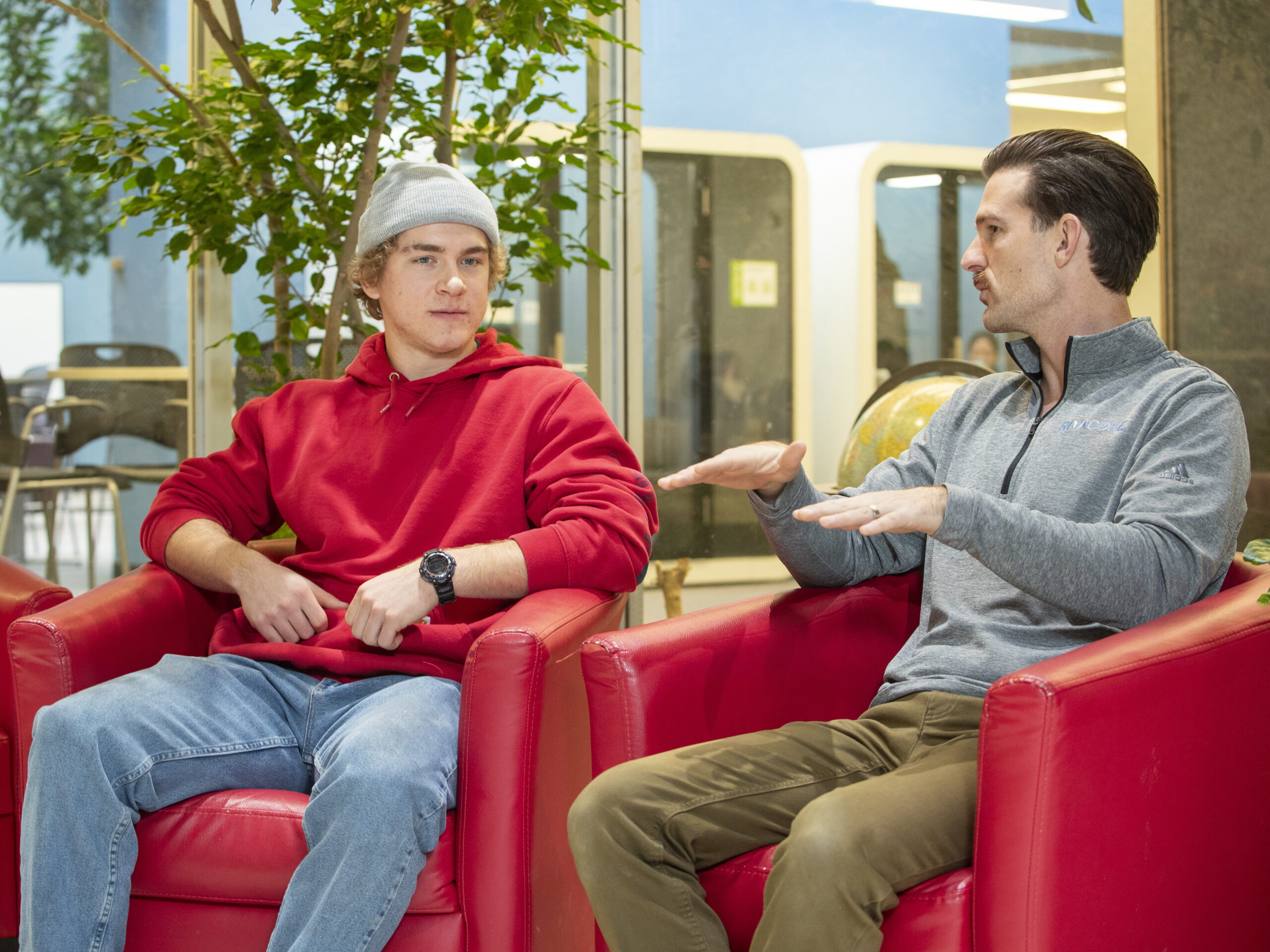
“I’ve been all over,” said Pacey. “Working in Lynn Lake on the gold mine project, back to the city to do model layouts, and out to Gillam to do a job there.”
Pacey’s long-term goal is to be in construction project management and, while he was new to surveying when he started at RivaCore, he’s found the time spent to be of tremendous value.
“I’m confident in it now. There are great teachers, great colleagues here.”
“Aidan is an absolute superstar,” said Rivard. “I’ve probably heard from four different senior staff members on different occasions come to me, by themselves and say ‘Colin, make sure you don’t lose that guy.’”
Pacey’s quick learning skills have helped him get out into the field solo, a rare opportunity for someone so green in their career. A willingness to learn has been present too, which is one of the key skills that Rivard looks for when hiring students.
“We want someone who will go somewhere, enjoy what they do, and work hard at it. We are looking for that willingness to learn and develop, and help out your coworkers in any way you can.”
Rivard remembers a day where he went into the RivaCore office in Dugald to clean things out of the storage room and Aidan was the first one to come up and ask if he needed a hand.
“There’s just an absolute willingness to help out the team in any way he can.”
It’s a culture that Rivard has been driving since he started his business.
“I recently took a leadership training program and the guy leading it used an analogy that really stuck with me: before you can paint an old tractor, you have to scrape the old paint before you can put a new coat on.
It dawned on me that we’re naturally good at training and making sure our people know the way that we do things. Rather than scrape off an old coat of paint, we’d rather grab new guys, give them an opportunity and let them run with it.”
It’s why the company will keep coming back to co-op students for future projects, creating a mutually beneficial relationship with the program Rivard graduated from 13 years ago.
“We’ve had one student say that he’s learned more in the first four days of his co-op than his entire last co-op. That gets me really excited.”
Profile by John Gaudes (Creative Communications, 2012).
Work-Integrated Learning at RRC Polytech
Work-integrated learning opportunities, including co-ops like Pacey’s at RivaCore, allow students to gain practical work experience while also providing industry with enthusiastic, skilled workers. A meaningful way to give back and mentor students, many alumni are employer partners. Learn more about work-integrated learning at RRC Polytech and how to become an employer partner here.
]]>