In January, we asked staff, students, and faculty to share the art they created at our January Paint Night- Below are the wonderful creations!
Art can be used to decrease cortisol (stress hormone) levels in our brain and releases endorphins that help us manage the experiences of anxiety. Creating art is a fantastic stress reliever! Paint night can mean taking care of yourself in a different way than what we usually do for ourselves. Keep an eye open in the staff news/student news for our next paint night updates.
Painting is just one way that creativity can promote stress management, but if painting is not for you that’s okay! We curated a list of accessible and beginner friendly crafts, take a look at the list below.
Creative Projects
- DIY Copper Pipe Lamp
- Daisy Chain Bracelet Tutorial
- DIY Copper Coffee Maker
- Clay Coasters
- Origami paper milk box – YouTube
- 100 DIY HOME DECOR IDEAS + HACKS
February Paint Night
With a Cold and Dreary winter, we may be searching for hobbies or ways to help promote our own self-care. We will be holding another paint night for folks to join in and tune in to their creative side. Practicing art and embracing our creativity can help us to feel grounded, assist with managing stress, and an opportunity to focus on creating with our hands. Please join us for a free Paint Night to tune in to that part ourselves as we approach spring.
The Details
Date: February 17th, 2022
Time: 6-8pm
Platform: WebEx
About the Artist

Kisa MacIsaac, RRC grad and owner of Power of Painting, will (virtually) lead you through an evening of self-care as you create your very own painting.
THRIVE events encourage balance and self-care that in turn supports good mental health. All THRIVE events are offered at no charge to participants and are open to staff, students, and faculty.
Need Supplies?
For this virtual paint night, you’re welcome to use your own supplies or sign up to borrow a supply pack. Supply packs will include the canvas, paint, and brushes and can be requested when you register. Brushes and unused paint must be returned to your campus so they can be reused.
We have a limited number of supply packs, so be sure to register early.
There is abundant evidence that taking time to express ourselves through creativity in a social group improves mental health and overall well-being. Don’t miss this chance to make yourself a priority.
More on the Instructor
Kisa MacIsaac (she/her) is Métis, a mother, artist, educator, and a RRC graduate (ECE diploma 2005). She works in a nonprofit early learning and
childcare program in Winnipeg’s inner city and leads wellness painting events as well as creating custom artworks. Making art is medicine –
it has the power reduce stress and anxiety, it is relaxing. Everyone can make art, it’s all about letting go of fear and just creating and going with the flow!Check out: Power of Painting – Workshops and Art by KisaFacebook.com/powerofpaintingIG: @powerofpainting204
]]>
This time of year, the shortened days and chilly temperatures can take a toll on our mental health. Even in a usual November, less daylight, more time spent indoors, and less physical activity can lead to a case of the winter blues. This year, as many of us are studying and working from home with less reason to leave our home, those winter blues can really drag us down.
Yes, it’s not technically winter yet, but here in Manitoba, we feel it already. Many people report having less energy, experiencing lower mood, and having more intense food cravings.
There are things we can do, however, to help promote good mental health. Here are some suggestions:
- Get outside during daylight hours. Even if it’s only for a few minutes, the light and air will help.
- Exercise regularly. Whether indoors or outdoors, regular exercise boosts your mood and energy levels. Movement of any kind helps. Try our livestreamed Friday lunchtime yoga class.
- Connect with friends virtually. Make a point of spending time with people with whom you can chat and laugh.
- Develop good sleep habits. Whenever possible, go to sleep and wake up at the same time each day. Leave smartphones and tablets in another room.
- Eat a balanced diet. We tend to crave carbs more in the winter, so make sure you’re still eating some veggies and fruit daily.
Seasonal Affective Disorder
Sometimes, the seasonal change can trigger the onset of Seasonal Affective Disorder (SAD), a treatable mental health condition. SAD is a type of Clinical Depression that is related to changes in the seasons. According to the Mayo Clinic, SAD symptoms that are specific to winter depression are:
- Irritability
- Tiredness or low energy
- Problems getting along with other people
- Hypersensitivity to rejection
- Heavy, “leaden” feeling in the arms or legs
- Oversleeping
- Appetite changes, especially a craving for foods high in carbohydrates
- Weight gain
If you’re feeling low for days at a time, have thoughts of suicide, or are using alcohol/drugs to cope, see your doctor or access RRC supports for students or staff.
Getting Better
Treatments for SAD can include medication, talk therapy, and light therapy. Light therapy involves sitting near a special lamp so that you’re exposed to bright light. Light therapy mimics natural outdoor light and appears to cause a change in brain chemicals linked to mood.
Borrow a Light Therapy Lamp from Library Services
Interested in trying light therapy? SAD Lamps are availaible on loan from Library Services. Simply complete the booking request to arrange the loan.
If you’re feeling the winter blues, whether it’s SAD or not, please reach out to someone and talk about it.
]]>
The Paint Party at EDC, featuring Kisa MacIsaac from Power of Painting (and RRC alum).

A nature walk through Chickadee Trail at Birds Hill Provincial Park

A student enjoying a visit from St. John Ambulance therapy dogs. Photo: Gabby Piche

Thrive Ambassador and Business Administration student, Veronica Feliz, helping students and staff sign up for a free massage. Photo: Katlyn Streilein

Registered Massage Therapist, Jason Mathes, helping a student de-stress. Photo: Katlyn Streilein

MC College students providing free manicures and braids. Photo: Sarah Vandale.

A few of the painters from the NDC party with Painting on the Prairies.
There was so much more going on that we didn’t manage to capture through photos. Even many of the regional campuses hosted activities.
We hope everyone who participated in Thrive Week enjoyed a break from the grind of school and work and is inspired to make time for balance and self-care on an ongoing basis.
This week was possible thanks to funding from the Red River College Students’ Association, Human Resource Department and Healthy Minds Healthy College Initiative. Big thanks as well to the planning group: Amanda Dorscheid, Beverly Wood, Priyanji Mediwake, Arsalan Zaheer, Carmen McIntosh, Erin Edwards and Breanna Sawatzky. Student volunteers who served as Thrive Ambassadors were a huge help.
Stay tuned for more Thrive style events in the new year.
]]>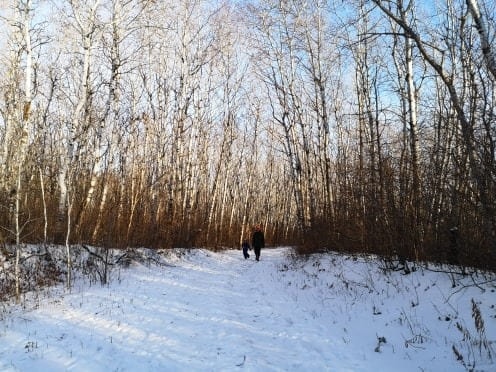
A walking path through Birds Hill Park
Being active in nature is great for your mental health. When the seasons change and the temperatures drop, we tend to stay inside more. Getting out for some fresh air and movement (even just walking), before the January deep freeze, can be really helpful.
This is why, for Thrive Week, we’re heading for a nature walk at Birds Hill Park.
All students and staff are invited; we have a bus chartered to transport us all.
To join the nature walk, simply email Breanna to reserve a seat on the bus. Meet us at the Notre Dame Campus bus loop at 10am Saturday, November 9th. The bus will return us to the same place at 2pm.
We’ll spend some time bird watching, walking through the trails, and enjoying some hot chocolate.
According to Manitoba Sustainable Development, this park is “a mosaic of landscapes not commonly found in such close association, such as esker ridges, dry prairie, wet meadows, bogs, and aspen-oak and mixed boreal forest communities.”
Dress for the weather and pack some water and a snack. Family members are welcome.
Date: Saturday, November 9
Location: Meet at the Notre Dame Campus Bus Loop
Pick up time: 10am
Drop off time: 2pm
Contact: Breanna Sawatzky
]]>
Given this timing, it’s fitting to examine how mental health and climate change are connected. Once we take a look, there are indeed several ways that climate change affects mental health.
First, natural disasters place increased strain on people living in areas affected by droughts, floods, forest fires, hurricanes and the like. The trauma caused by these events increases risk of depression, anxiety disorders, and post-traumatic stress disorder. While not everyone exposed to the trauma develops a disorder, when a whole community is affected by such a disaster, there will certainly be an increased demand for mental health services and a disruption to the community as a whole.
In addition, many people experience climate change related grief in response to experienced or anticipated loss of natural environments. Lakes, land, forests, and other natural environments help us develop a sense of place and are key settings in which we build good mental health. The grief related to losing these is very real and impacts a person’s well-being.
Yet another way in which climate change affects mental health is through climate anxiety: worry and fear related to the consequences of climate change. Many people can be concerned, even very concerned, about climate change while still functioning well in their lives. For some, however, this anxiety can become intense and lead to feelings of helplessness, hopelessness, intense anger, inability to continue with daily activities and even thoughts of suicide.
If you are feeling this extreme form of climate anxiety, please reach out for support. Students can connect with RRC Counselling Services or use the student benefits plan to connect with a therapist in the community. Staff can reach out to our Employee and Family Assistance Program.
For anyone whose mental health is affected by climate change, it can be helpful to participate in direct positive action and to be around others who understand your concerns. So, check out the activities that the Sustainability Office has planned and get involved.
References:
Lewis, J. (2018). In the Room With Climate Anxiety PART 1. Psychiatric Times, 35(11), 1–2.
Focus on climate change and mental health. (2018). Nature Climate Change,(4), 259-259.
]]>
She Wore Flowers in Her Hair is an event in support of mental health awareness in memory of Jaedra Winter who died by suicide in June 2015. The aim is to raise awareness, spread love & create a community where people feel safe talking about mental health. All proceeds go to Mood Disorders Association of Manitoba.
The event takes place at Kelburn Estate and starts at noon on Saturday, June 8th. Pre activities such as Bootcamp by Johana Seier and a Volleyball tournament will commence at 11:00 am. Pre registration for these events is 10:30 AM – 11:00 am.
Bring a lawn chair, cash, Picnic blanket, yoga mat, sunscreen, etc.
Activities include:
Live Bands
Inspirational Speakers
Flower Crown Workshop ($5)
Craft Table
Self Care Booth – come make your own self care bag with goodies! (FREE)
Therapy Puppies
Pony Rides
Silent Auction
Makers Market
SWF Merch, Pop, Chips, Cotton Candy on sale!
Lunch by Pony Corral (1:00 PM – 3:00 PM, FREE)
Laughter Yoga
Yoga by Modo Yoga
Meditation
Closest to the Pin Gold Competition with prize
Axe Throwing by Lumberjax
Card Readings
Photobooth by Photomonkey
AND MUCH MORE!
Tickets are on sale now
http://weblink.donorperfect.com/sheworeflowers2019
Follow She Wore Flowers in Her Hair on Instagram @officialsheworeflowers
& Facebook, for more information.
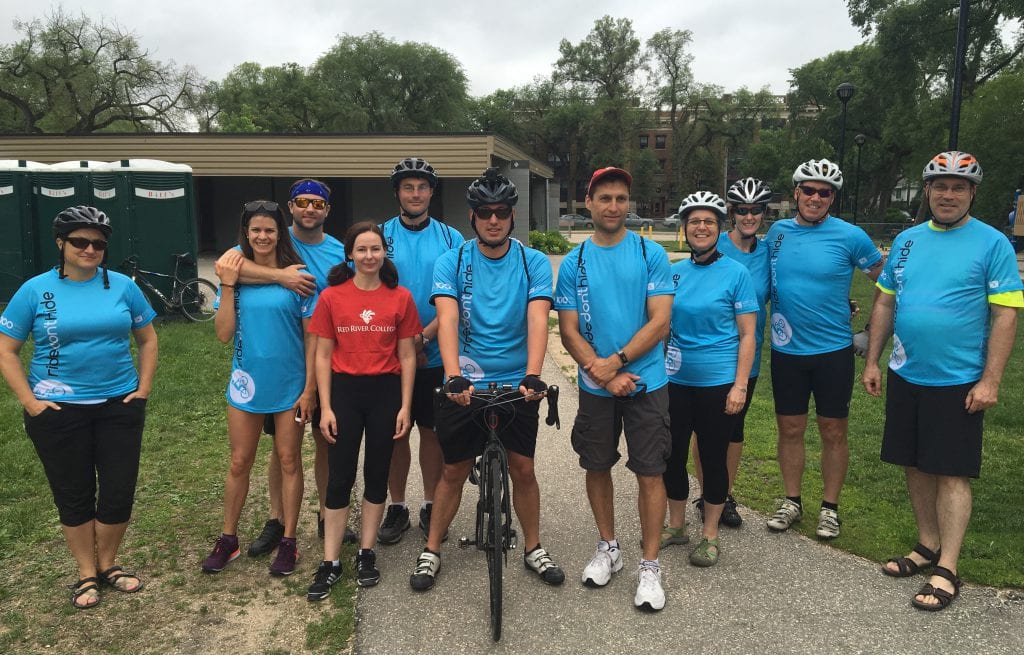
RRC’s 2018 Ride Don’t Hide Team
You’re invited to participate in CMHA’s ‘Ride Don’t Hide’ – Canada’s largest bike ride for mental health. The event is held on Sunday June 23rd in 25 communities across the country with 4 and 20 kilometer route options. CMHA’s Manitoba and Winnipeg division is starting recruit bike riders for the event and RRC is excited to participate.
According to CMHA, Ride Don’t Hide is a nationwide fundraising bike ride that brings mental health out into the open. With almost 10,000 riders and hundreds more family members, friends and volunteers across Canada taking part, the ride raises more than $2 million each year for the Canadian Mental Health Association. Get on your bike and join the movement. Ride. Don’t hide.
CMHA is a community partner, helping RRC with our Healthy Minds Healthy College Initiative. This makes participating in Ride Don’t Hide an ideal opportunity for us to show support in return.
In 2018, our team had a wonderful time participating in this meaningful and well organized event.
If you’d like to be part of the RRC team for Ride Don’t Hide, please contact Breanna Sawatzky or 204-632-2061. Participants can chose to raise funds, or just ride. Students, staff and faculty are welcome.
]]>
RRC’s Recreation Services is hosting this year’s Get Movin’ Challenge. Those who are involved are trying to log 7,000 steps per day, through a variety of activities. Sign up to join the fun. The prizes are fantastic this year!
Since physical activity contributes to a healthy mind, we’re supporting the Challenge with three group walks outdoors at the Notre Dame Campus. These walks are a perfect opportunity to connect with friends or colleagues, meet new people, get fresh air and sunshine, while logging 3000 steps.
Walks will start at 12:15 outside the Campus Store (NDC) and will return to the same place by 12:50.
Bring your warm gear; walks will go ahead unless the Environment Canada website indicates a temperature of -27 C or lower with the wind chill factor.
Dates
Wednesday February 6, 13, and 27
All students, staff and faculty are welcome to join; there is no need to register.
]]>The Wellness Committee’s Mental Health Subcommittee has arranged two wellness walks as part of the Get Movin’ Challenge. Those who are involved in the Get Movin’ Challenge ae trying to log 7,000 steps per day, through a variety of activities, although you don’t have to be signed up for the Challenge to come out.
The wellness walks will be great opportunities to log some steps, while getting fresh air and connecting with friends and colleagues. Students, staff, and faculty are welcome. There is no need to register.
The Plan

We’ll be meeting at noon. Everyone is welcome (students, staff, and faculty). After a short teaching on mindful walking, we’ll head out together for a 30 minute walk, logging roughly 3000 steps. Mindful walking is not a fancy or complex idea; it’s simply the practice of being aware of your experience as you walk.
After the walk, we’ll gather together, enjoying some fair trade tea and hot chocolate, courtesy of the Wellness Committee.
Why a Wellness Walk?
 We know that being active is great for our physical and mental health. Outdoor, mindful walking with friends leads to many health benefits, including better mental clarity, a boost in positive emotions, and improved self-esteem. Taking a break from studying or sitting at your desk, getting out for movement, sunlight and fresh air will actually make you more productive over the course of the day. So, come out and join us!
When & Where
NDC
Date: February 28th
Meeting Location: The Cave Lounge
Time: 12:00 noon – 1:00 pm
EDC
Date: February 27th
Meeting Location: Roblin Centre Cafeteria
Time: 12:00 noon – 1:00 pm
*We’d like to send a special thanks to Dayna Graham and Debbie Donato for their help in coordinating the EDC walk.
]]>Created over 30 years ago, the Terry Fox Fitness Trails is area where people of all fitness levels can enjoy exercise in the beautiful Assiniboine Park. Re-opened in June of 2016, and located in the South-East corner of the park, the 1km Trail has been extensively renovated and has replaced all 12 pieces of it’s fitness equipment.
The beauty of the park is that you can create a workout that fits you on that day, the only limit being your imagination. Along the running trail, each piece of equipment has signage explaining each exercise with diagrams. The trail is open year round, 24 hours a day.
Click Here for a Global News video touring the updated Terry Fox Trail
Click Here for the Assiniboine Park Map
]]>