
It’s a common story: a graduate of RRC Polytech’s Creative Communications program enters the program expecting their path to go one way. Then something — an instructor, a course, a project — points them somewhere new.
“RRC Polytech basically shaped my life in every way,” says Doug Darling, Creative Communications grad, instructor, and CEO of local video production agency Tripwire Media Group, which has worked with companies like Scotiabank, Tabasco and TikTok.
“As a young adult with a failing music career, I had no idea what I wanted to do. After going into Creative Communications, I found my passion for what would become my creative outlet and career.
“It very much culminated in one project — I had to make a three-minute video montage and I wasn’t taking it too seriously. Through that project, though, I found my calling. I realized that video was the culmination of art, and that editing was my new musicianship.”
Examples like Darling’s are something James Turner, instructor of journalism, photography and photojournalism at RRC Polytech, sees quite a bit across all four of CreComm’s specialization areas.
“Something usually strikes students along the way that triggers their desire to want to pursue that,” says Turner. “I’ve heard of various media production assignments that students have found valuable. For journalism, it’s often Remembrance Day assignments where students understand the human impact of journalism and what it means to put a face to a story.”

After two semesters spent dipping their toes in all areas of communications, CreComm students are given the option to specialize in Journalism, Advertising and Marketing Communications, Public Relations and Communication Management, or Media Production.
Their second year also includes two work placements, where students take the skills they’ve learned throughout the program and apply them in the real world.
Thanks to these hands-on learning opportunities, the passionate instructors, and the success of its graduates, Creative Communications has a local reputation for giving workplaces new employees who can hit the ground running.
“It’s about graduating students who are ready to tackle just about anything in the field of communications,” says Kelly Stifora, Creative Communications program coordinator.
“It’s the breadth of skills they’re exposed to in the program. Our students build strong fundamental writing, project management and organization skills — but then on top of that, they’re exposed to almost every aspect of the communication industry.”
For those studying advertising, this might include creating print and online ads, or working through marketing and data analytics. In public relations, it’s mastering digital and traditional communication channels and learning to work in an environment where social media drives public awareness for day-to-day information. In media production, it’s fundamentals such as writing scripts and production plans — and building from there.
In second-year journalism, which Turner instructs, students are creating real-world resources that go beyond the classroom. Right now, they’re building a resource website to assist voters in Winnipeg’s upcoming municipal election in October 2022.
“They’re working together as a team to create all manner of journalism materials,” says Turner. “Whether it’s explainers, features, podcast stories, things like that. The audience isn’t necessarily news readers, but it’s interested voters who want information heading into the election.”
The pace of the program also lends itself to creating confident graduates. Much like in the communication industry itself, where reaction time and understanding the message are so important, learning a wide variety of topics in a short period of time in the program is a key reason why Stifora believes grads go on to find success.
“You learn to work in a mode where you’re not second guessing yourself,” he says.
“We all experience setbacks and failures in all aspects of life, and we hope that one of the things Creative Communications students are getting from their training here is the ability to get over those moments and put them behind them — solving the problem and moving on to the next task.”
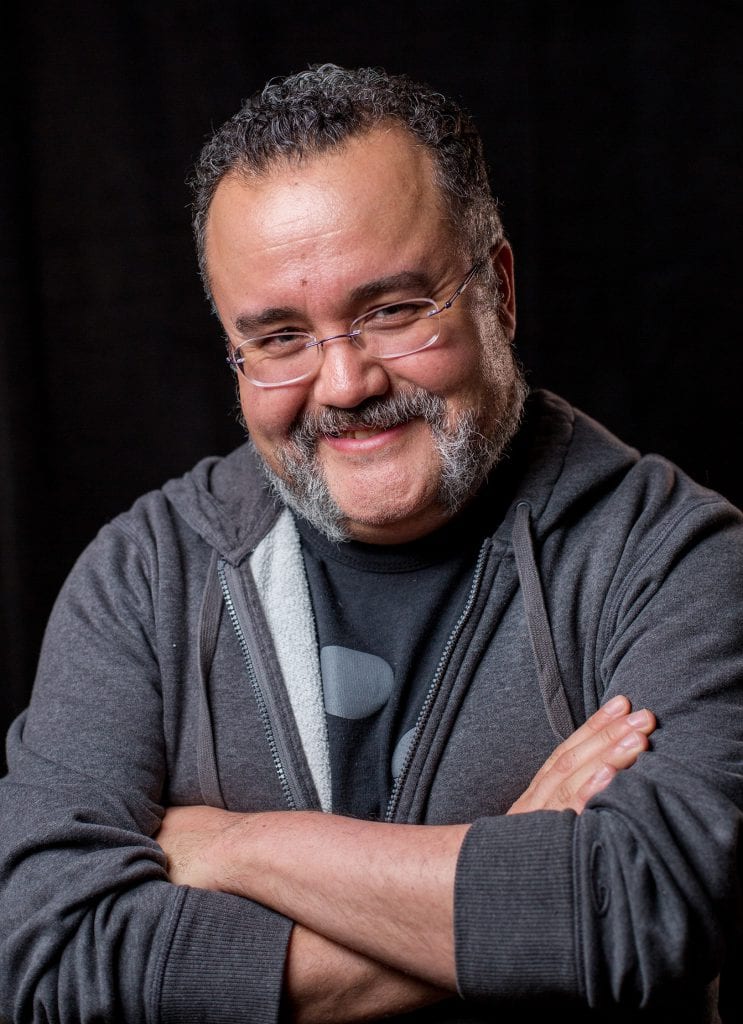
All of this adds up to a program that can take graduates to some pretty interesting places. Take Pablo Hidalgo, for instance. A 1996 alum, Hidalgo began his career at McKim Communications Group in a fairly typical role for a CreComm grad: a copywriter.
At the same time, he was freelancing online for Pennsylvania-based West End Games — the company that developed the first Star Wars role-playing games. Through connections made there, Hidalgo eventually ended up writing and developing content for Lucasfilm starting in 2000. His role there has only expanded since, as he’s now the keeper of the keys for the online Star Wars encyclopedia and is a resource for where the franchise goes in future projects.
Learn more about Hidalgo’s career success.
“There are a lot of careers that are different and interesting,” says Stifora. “Historically, I’ve heard — and I can’t put words in other people’s mouths — people say it was their Creative Communications diploma that opened doors for them or gave them the confidence to pursue things.”
Profile by John Gaudes (Creative Communications, 2012)
Creative Communications
Prepare for a career in advertising, marketing, broadcasting, journalism, media production, public relations or communication management. The application deadline for the Fall 2022 start is June 27 so apply today.
Learn More ]]>It’s an announcement 118 years in the making: in February, the Winnipeg Construction Association (WCA) named RRC Polytech instructor Ellowyn Nadeau the first woman board chair in its history.
“This is about women in general — it shows we have a place in this industry,” says Nadeau. “We’re finally achieving an understanding that women can contribute in this field, and we want to. It’s an honour and a privilege.
Nadeau has a long history in construction. She’s been a Construction Management instructor at RRC Polytech since 2015, a Supply Chain Management Professional since 2010, and a professional civil engineer since 2000. Engineering runs in her family — her dad was a mechanical engineering professor at the University of Manitoba — but for many women and girls, construction has not been considered a viable option.
“There weren’t a lot of women in the industry in the 1990s,” says Nadeau. “Even now, there are more women in offices than in the field. The field is less welcoming to women — you’re constantly transitioning from crew to crew, job to job, and you have to prove yourself every time. As an industry, we have to work on that.”
Proving herself is something Nadeau has done. She is past chair of Manitoba Women in Construction, a member of the Committee for Increasing Participation of Women in Engineering, and a member of PEO International, a philanthropic organization providing educational opportunities for women. She joined the WCA board in 2015.
“The WCA has been very supportive, respectful, open and encouraging,” says Nadeau. “This is a culmination of the last couple years, but it’s just the start.”
Dustin Pernitsky, WCA Communications Manager, said Nadeau becoming chair signals a long-needed shift in the province’s construction industry toward being more inclusive.
“Ellowyn knows the portfolio and the industry very well — her appointment isn’t a surprise, which means we are headed in the right direction,” he says. “We need to find new sources of labour, and we haven’t historically done a good job of recruiting women. We want to continue that momentum — it’s also about diversifying the industry.”
RRC Polytech and the WCA have a strong partnership — including entrance awards for Construction Management students — and Nadeau’s direct link to future professionals is critical ahead of an expected labour shortage, allowing the College to better prepare and train students entering the field.
“Being chair of the WCA enables me to give students up-to-date information on the industry,” says Nadeau. “And it shows students that construction is diverse — and you should look at the role, not at the gender.”
Nadeau says RRC Polytech supports her work with the WCA, as it means both instructors and students can keep up with the changing industry.
“In 10 years I’d like to see a significant change — double or triple the number of women in the field,” she says. “More women superintendents, louder voices in the industry, more women in construction leadership roles. I see that coming, but we’re not quite there yet.”
Still, Nadeau believes this is a good start.
“There are so many passionate women in construction,” she says. “I definitely want to see another woman as a board chair.”
Photo credit: Carman Tang, Winnipeg Construction Association
]]>Faculty at Red River College have stepped up to help produce ‘ear savers’ for Manitoba’s frontline workers.
Rob Ataman, Serge Broeska, Jesse Jamison and Nino Caldarola — all instructors in RRC’s Mechanical Engineering Technology and Manufacturing Technician programs — each volunteered to bring home one of the College’s four 3D printers, which are capable of producing the pieces. Ear savers are plastic adapters worn at the back of the head to hold medical masks in place and eliminate strain, irritation and blisters caused by elastic straps.
“When I got the call to make these ear savers, I jumped at the opportunity,” says Broeska, whose wife works as a physician at Health Sciences Centre. “As a technical college with a stellar reputation in the community, RRC is ideally suited to do its part and is contributing in so many ways. I felt this project was a no-brainer — a way to contribute while having to stay at home during this period of social isolation.”
The College has partnered with Winnipeg Fighting Covid, a group of local hobbyists and makers who are using their personal 3D printers to create, sanitize and deliver the ear savers, and other protective equipment (PPE). The group has received approval and guidelines from Shared Health Manitoba to create and distribute the ear savers, and currently has 121 printers signed on to help with the cause.
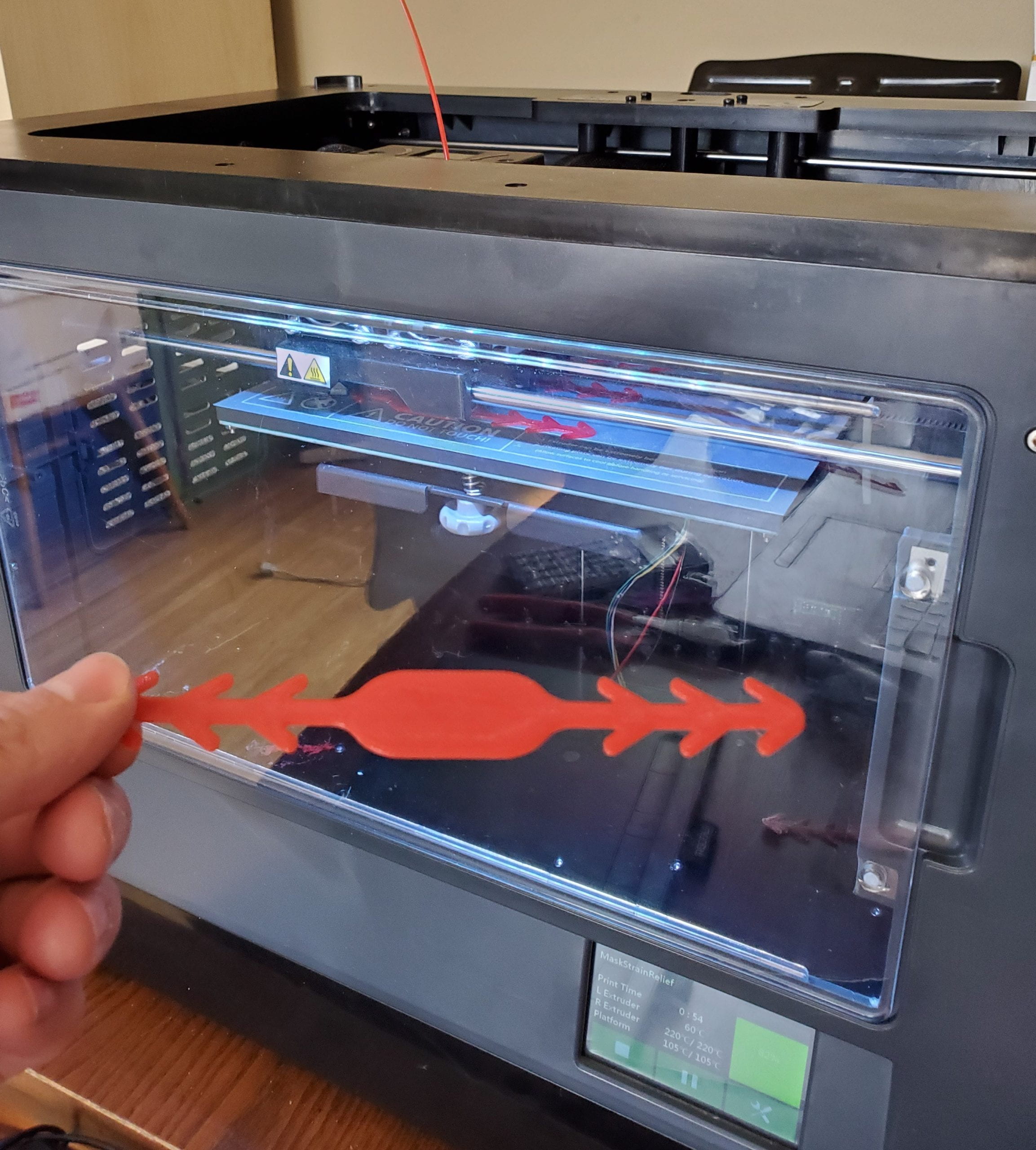 “We are Manitobans and when there is a need, Manitobans jump in to help,” says Marc Hache, a Winnipeg Fighting Covid volunteer. “Prior to our group’s formation, individual makers had — on their own initiative — sought out those in need, and printed and delivered well over 10,000 units.”
Hache says every partner approached has responded enthusiastically, and he is proud to be part of the worldwide maker community’s response to the crisis.
The RRC crew estimated they would be able to produce approximately 800 units per week, but wound up making more than 1,200 in the first seven days with the help of some friendly competition.
“There’s actually a bit of a competition going on among the instructors to print as many ear savers as possible,” Broeska says. “This project has really brought us together, where we can share ideas and have a bit of fun while we fight this pandemic.”
Each of the four printers can produce about 11 units per two-hour run. Most of the process is automated, aside from collecting the units and replacing the materials at the beginning of each run.
According to Ataman, the added project doesn’t feel like work. He begins printing at 5:30a.m., before his wife begins work, and will sometimes go until 1a.m., all while maintaining his usual responsibilities.
“The College is part of the community and I believe we have the duty to be leaders and step up where needed,” says Ataman. “This also proves to my students the versatility of what we do and how important it is. I’m extremely proud of the students and all the support they have been showing us.”
Ataman was part of the St. Andrews Fire Department for 16 years, and remains close to the team.
“They deserve to have anything we can provide to make their jobs safer and easier,” he says.
To learn more, or to volunteer or donate to Winnipeg Fighting Covid, visit winnipegfightingcovid.com.
]]>Since the onset of the COVID-19 pandemic, Red River College’s trades and technologies programs have had to come up with new strategies for helping their students achieve learning objectives.
On March 13, the College made the decision to close its campuses and transition all courses online, in an effort to reduce the spread of the virus in Manitoba. For programs that relied heavily on hands-on, applied learning, that meant being resourceful and finding creative ways of teaching remotely.
“The students in these programs tend to come to the College because they are looking for hands-on experience,” says Evan Himelstein, program coordinator for Mechanical Engineering Technology. “What we’re trying to do is find ways to incorporate different technologies, so the students are still getting as close to the same experience we would normally provide.”
Simulated CNC milling
Glen Hawker, an instructor of Manufacturing Technician and Precision Metal Machining programs, has been able to deliver a near-identical machine learning experience to his students through simulation software licenses provided by Haas Automation.
The software carries all of the College’s lathe and milling machines, and allows students to explore the corresponding control panels from their homes. They can still complete assignments and create programs to run virtually — the only difference is they’re not creating a physical piece, or handling the machine’s tools.
“They have to follow all the steps: turning the power on, allowing it to power up, resetting and loading the program. And they have to do it safely,” says Hawker. “If they don’t follow the safety protocols, the simulation jams the same way the machine would.”
Hawker sees the technology as a definite advantage, noting his students now have more one-on-one time with the control panels while learning. In a lab setting, they’re typically split into groups to share a machine.
“This is something we could continue in the future to make our students better,” he says.
Customized on-camera training
Automotive Technician instructor Rahim Hosein was well prepared for the shift, having spent the last five years moving his course material — including all PowerPoints, quizzes, assignments and final exams — to LEARN. In recent weeks, he’s been using WebEx to communicate with his students in an online classroom setting.
“The theory portion of the course was a simple flick of a switch or click of a mouse to move to online class, and I found that being on camera in front of my students was about the same as standing in front of the classroom,” he says.
The practical portion proved more challenging. Hosein checked YouTube for clips related to what he was teaching, but finding them lacking, opted instead to create his own interactive videos using a Lumens Ladibug document camera.
With the Ladibug, Rahim can demonstrate the tools required for a specific task, how to use each tool and how to complete a repair — all while his students observe and ask questions. He says they’re as interactive as they would be in a regular class, and by the end feel confident in their ability to perform tasks — for example, replacing the brakes on a vehicle.
“I know nothing can replace the actual hands-on learning,” he says. “I debated making videos of myself ahead of time and sharing with the students, but I realized that the slowed-down method, and the ability to stop to ask a question and get immediate feedback, was crucial.”
Flexibility in programming
Whether moved there over a few years, or a few weeks, all of RRC’s trades and technologies courses and programs are now being delivered online. Electrical instructor Ryan Peters is one of the people who helped colleagues install and familiarize themselves with the online platforms currently in use.
“We set up a few impromptu training sessions during Study Week to make sure everybody would be ready for the next week,” says Peters. “And now that we’re in it, we’ve had to change and adapt on the fly. It’s really opening up everyone’s eyes to how flexible we can be with delivery and instruction.”
Many instructors use Webex as their teaching platform and Microsoft Teams as their main communications platform. Materials are being uploaded into LEARN every day so students are provided with information, resources and videos that enable them to succeed in their courses.
“We’re still able to offer training through a global pandemic,” he says, “and offering a high level of education, where in other provinces that may not be the case.”
]]>The office of Brian Gebhardt, a Masonry instructor at Red River College, is reminiscent of the classrooms adjacent to it: surrounded by projects and artwork made of bricks, with a layer of dust on every surface.
Gebhardt is everything one would expect from a mason — covered in the same dust that cakes his office, with calloused hands hardened from almost 45 years in the trade.
For 30 of those years, that dust has been a byproduct of his work at RRC, and this year he received the highest honour an apprenticeship instructor can achieve when he was named Instructor of the Year by Apprenticeship Manitoba.
Gebhardt doesn’t let a little dust bother him; after all, he’s been working with bricks since his first construction job right out of high school, where time spent watching and talking with masonry veterans sold him on the trade.
“They seemed to enjoy what they were doing, and wage-wise it was what I was looking for,” he says.
To get a foot in the door, Gebhardt cold-called as many masonry contractors as he could to ask for a job, which he eventually landed — through what he’s convinced was a real-life game of Telephone.
“I phoned them and said, ‘I want to be a bricklayer,’ and I think he thought I said, ‘I am a bricklayer.’ And he said, ‘Have your tools tomorrow at 1700 Taylor,’” Gebhardt recalls with a smile.
“I picked up some tools — I had none — and I showed up at the job.”
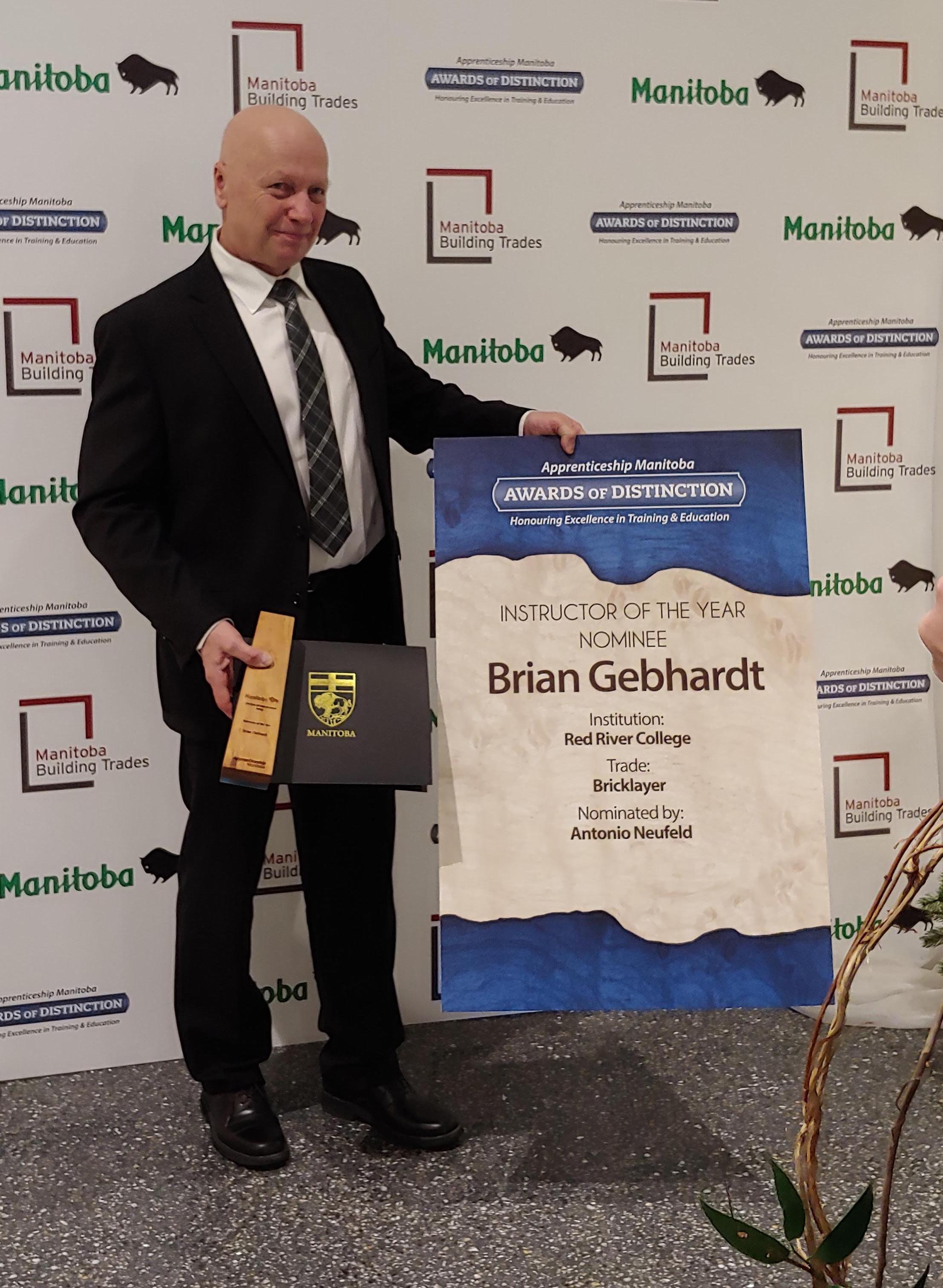 Gebhardt proved a quick study, and later attended RRC’s Masonry program to further hone his skills. Though he struggled at times throughout the program, he graduated on time, and eventually hung out his shingle as a freelance contractor.
He’d been working for 13 years when the instructor position at RRC became vacant. One of Gebhardt’s former instructors had retired, but he wasn’t planning to apply for the position until his mother reminded him of a promise he’d made back in his student days.
“(She) reminded me I said, ‘If I ever have the chance to be the bricklayer instructor at RRC, I would apply,’ and I said, ‘You’re right, I did.’”
Knowing he was up against industry veterans, Gebhardt says his expectations were low.
“When they offered me the job, I was a little taken aback,” he says.
The offer made Gebhardt the only masonry instructor in Manitoba. He wanted to make sure his students’ experiences differed from his, but didn’t want to completely change the tricks of a centuries-old trade.
“I dove into it with a lot of intent to improve on my experience as a student,” he says.
“There are some things I thought (my instructor) could have done differently, but some of his methods were tried and true.”
Gebhardt used this philosophy to shape and guide his teaching, which helped lead to his nomination for the Instructor of the Year award earlier this year.
“I was pretty proud of even being nominated,” he says. “It was pretty important to me.”
When looking at Gebhardt’s success as an instructor, his students are the best evidence around. They consistently score above the national average, and a number of his graduates — now working as contactors or forepersons — are happy to send their apprentice bricklayers back to RRC to learn from him.
Most impressive is his work with Skills Manitoba, and the efforts he’s made to bring his students to the top level at national bricklaying competitions.
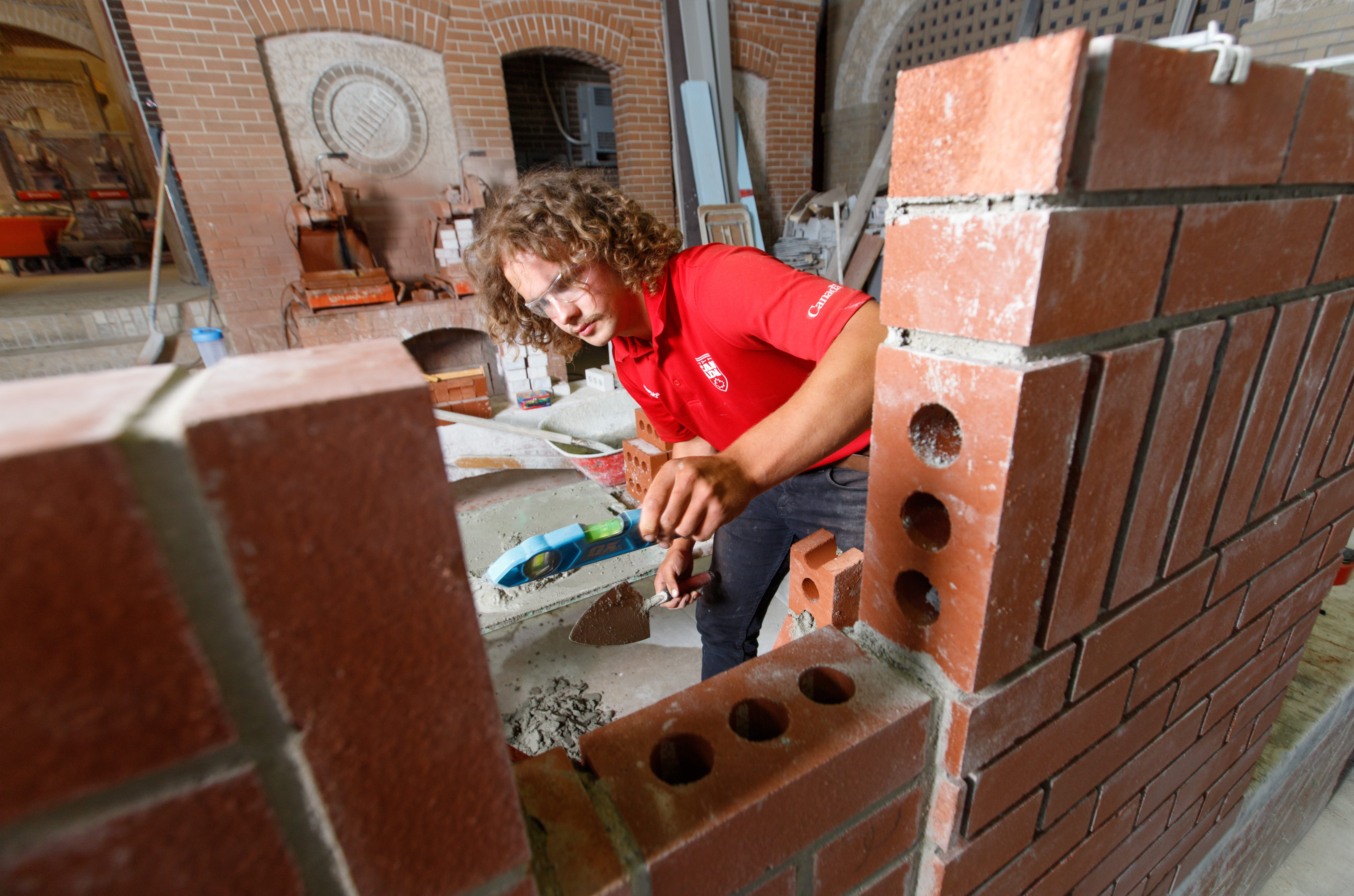 He first sent a student to compete 22 years ago; that student came back with a gold medal. In the decades since, they’ve scored medals every year — including 11 golds. This year, one student, Antonio Neufeld, made it all the way to the WorldSkills Competition in Russia.
Neufeld (shown at right), who also earned a gold at the Skills Canada competition in Edmonton in 2018, was the one who nominated Gebhardt for the Instructor of the Year award.
“I can confidently say I would not have won first place in Edmonton without Brian’s leadership, nor would I have made it past the selection event for Russia in Halifax without his aid,” he wrote in his submission to the nomination committee.
Gebhardt says he’s proud of RRC’s Masonry program, and of the students he’s helped to support over the years. He’s also happy they’ve responded to his teaching philosophy — and that he’s helped to teach them an age-old skill.
“There’s nothing like dusting off your pants at the end of the day, looking up at what you’ve built and knowing it’ll stand for hundreds of years.”
Profile by Jake Maurice (Creative Communications, 2020)
]]>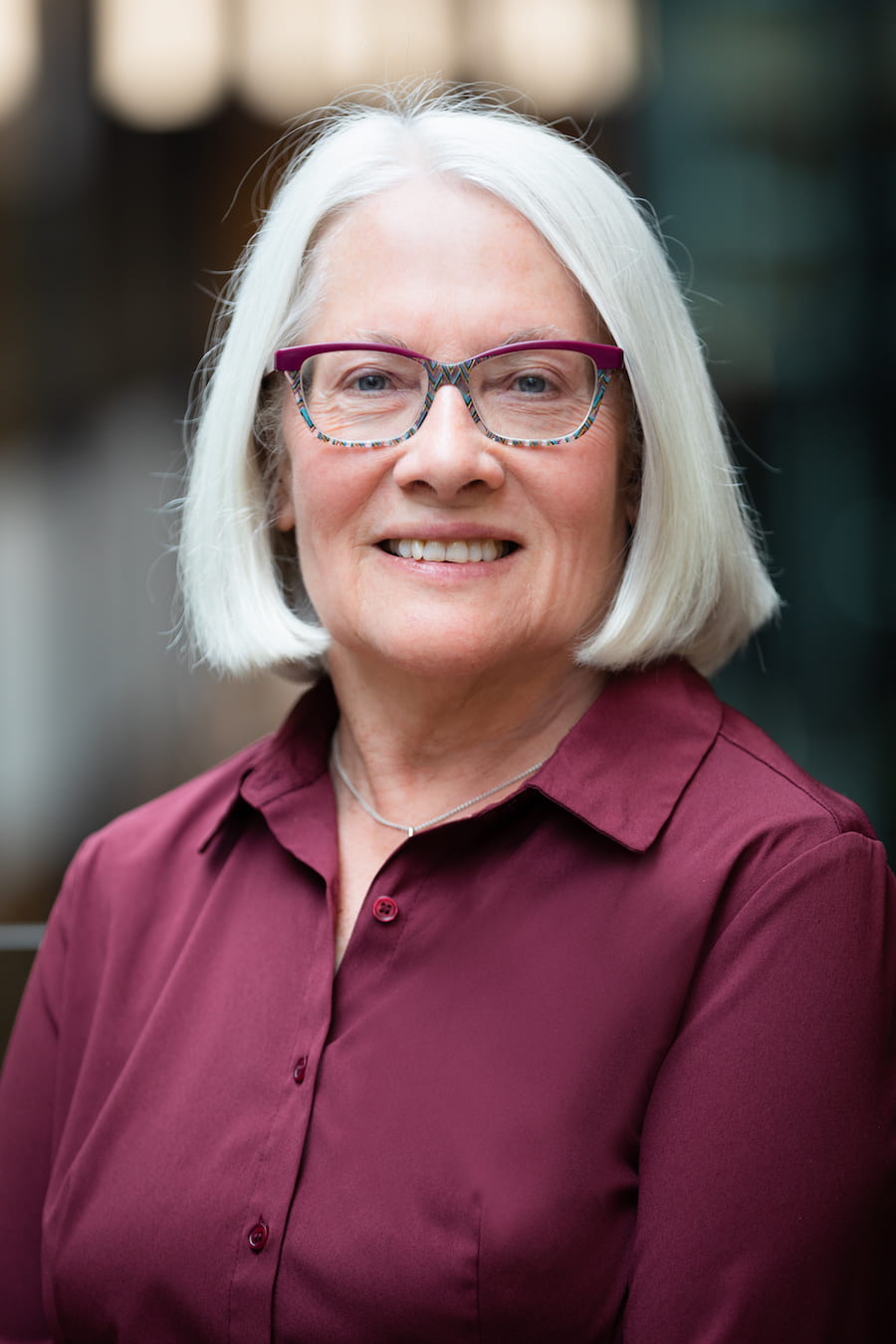 At 65 and close to retirement, Cathy Skene is the 2019 recipient of Red River College’s Students’ Association Teaching Award of Excellence.
A Certified Professional Accountant, Skene began her career at RRC in 1981 as an evening instructor of Financial Accounting. Since then she’s taught in the Accounting, Teacher Education and Continuing Education departments and is currently winding down her career as an online instructor in the Certificate in Adult Education program.
In their award submission, Skene’s students praised her knowledge of the subject material, her inspirational teaching style and her availability in and outside of class.
Skene says her enthusiasm for teaching comes directly from her students.
“They bring out the best in me,” she says. “I feel so lucky to have been a small part of their lives, and I’m so very happy that they enjoyed having me.”
In their submission, many of her students wrote that she makes learning fun. Skene says she strives to make the classroom an enjoyable atmosphere.
“Most people learn better when they’re relaxed, and enjoying the process,” she says. “The learning objectives of each course are essential, but there are also ways to add to the experience, by talking about what the students want to learn.
“And as adult learners, they bring a great deal of knowledge with them. It’s necessary to acknowledge and incorporate what they already know. We all learn from one another. A cooperative and supportive atmosphere means everyone can be a winner.”
]]>Dr. Kasongo Kalanda began his journey with technology and education at a time — and in a place — where few people had even heard of computers.
Originally from the Democratic Republic of the Congo (DRC), Kalanda’s options for post-secondary education were similarly limited as a young man, but he managed to find an opening at a private university, where he was among the first students to register for Computer Studies.
“It was the only available opportunity,” says Kalanda, now a Computer Skills instructor at Red River College’s Interlake and Peguis – Fisher River Campus. “I took things seriously from there and told myself it was this or nothing.”
Kalanda earned a bachelor’s degree in Science and a master’s in Computer Science from L’Institut supérieur d’informatique programmation et analyse (L’I.S.I.P.A.), before moving to pursue both a second master’s and a doctorate in Computing Education from the University of South Africa.
While there, he ran into a problem when his master’s thesis was required in English, a language he’d never had the opportunity to learn. Kalanda asked for three months to figure out how to read and write in English. He says it wasn’t easy, and compared it to a “do-or-die” situation.
In 2008, he was invited to participate in a Microsoft-sponsored program that trained teachers in how to integrate technology into education. During a brainstorming workshop, Kalanda helped come up with the idea to create a classroom technology integration competition for teachers using a World Cup Soccer model.
The end results were called School Technology Innovation Centres, an initiative for which Kalanda became manager for Africa and the Middle East, eventually travelling to more than 50 countries between 2008 and 2013.
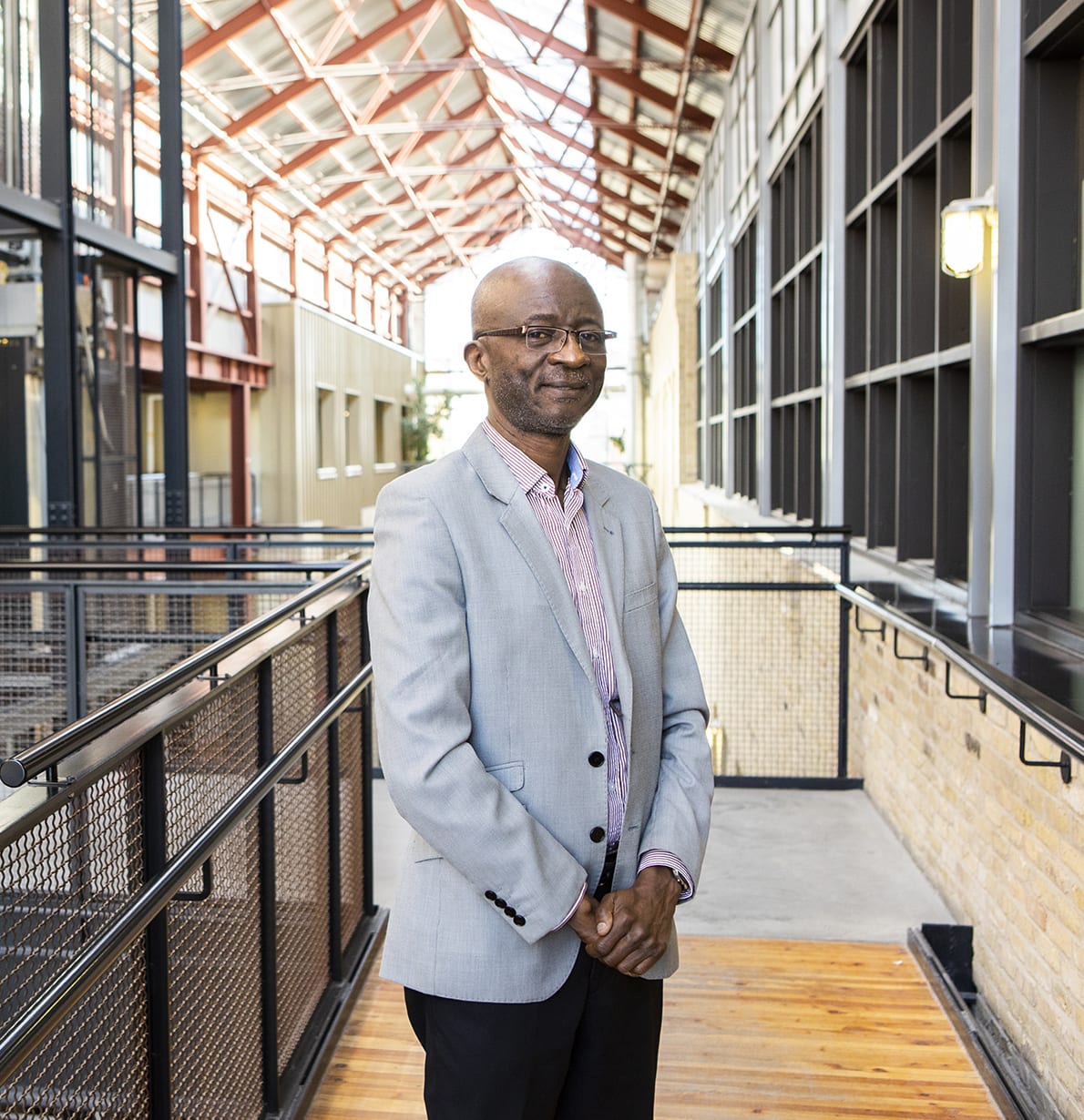 “I organized the competition and was part of the jury that selected the best teachers in Africa and the Middle East,” says Kalanda. “So after training them, we would select the 20 best teachers, who would meet other teachers from Europe, America and Asia to present the best project.
Kalanda met the team running the Canadian version of the competition when its members came to South Africa in 2010. A year later, they invited him to lecture at select universities in Canada, including the University of Manitoba, where he landed a position as a visiting professor, which he held from 2013 to 2015.
To this day, he still does research through the university’s Faculty of Education, teaching graduate students how to develop video games for educational purposes.
Kalanda was looking for a similar opportunity, which eventually led to him teaching the Introduction to Computer Skills course at RRC’s Interlake Campus in September 2018. He says the curriculum is very practical compared to his other teaching experiences so far.
“At RRC … it’s a concentration to prepare them to transition directly in a job, whereas university is formal theoretical training, whether you eventually apply it or not,” he says.
“If I teach a module like Microsoft Excel, and I don’t tell [students] the context they’ll be using it in, it would be kind of like trying to teach someone to drive without showing them what the car looks like.”
Kalanda has already added a Web 2.0 section to his class, which includes information about how to design, build and use social media. He wants his students to understand interactive ways to enter e-business, noting it helped one of his students make an impression during a job interview that led to her landing the role.
“She went for an interview and she told them she looked at their website and they are not selling anything! If they hired her, she offered to design interactive social media,” says Kalanda. “She wrote a letter thanking me.”
Kalanda says he settled in Manitoba with his family because he likes the people and speed of life here, and how it allows him more time and space for research, family and other projects.
“So far my life has been a journey. Wherever I go, it’s not like I plan to go there,” he says. “I end up there.”
Kalanda has also written books, including one about his life (available in both French and English), which will be available to order on Amazon starting May 20, 2019.
Profile by Raegan Hedley (Creative Communications, 2016)
]]>When it comes to career, Carmen Kaethler always accounts for family.
Kaethler is the lead instructor of the Business, Accounting and Management certificate program at Red River College’s Interlake Campus in Selkirk.
A mother to two young daughters, she also works part-time from home as an accountant for Elite Sports Injury, a network of physiotherapy clinics in Winnipeg.
Kaethler began instructing at RRC in 2017, and now spends about 12 hours a week teaching such courses as Financial Accounting 1 and Introduction to Canadian Business.
“I like the flexibility because it allows me to continue to give real-world experience to the students,” says Kaethler, who’s been a Certified Management Accountant (CMA) since 2013. “I’m still practising in a current local business, so I can give relevant examples to [my students] in class, instead of just talking about my past.”
Kaethler brings approximately 17 years (and counting) of office- and business-related experience to her classrooms.
“I love teaching and I love business, so being able to show that to students — to help them understand accounting, and make them see that it’s not that scary — I find it enjoying and quite rewarding,” she says.
In addition to accounting, Kaethler also has an entrepreneurial side. She’s a local publisher for Macaroni Kid, a website that publishes “hyper-local” e-newsletters and websites promoting products, events, activities and destinations for moms, kids and families.” A Transcona resident, Kaethler focuses on family events in east Winnipeg.
“On the front end, my customer is families in Winnipeg, to whom I offer a free calendar,” she says of the endeavour. “For instance, I’m stopping at the store right now to go buy craft supplies for kids to make crafts with the Grinch and Cindy Lou Who.”
“I also have my marketing on the other side. My business is selling and marketing. I work with local businesses to get their information out in front of my readers.”
 Kaethler is also the local license owner for Movies for Mommies, a parent-and-baby film event that takes place every two weeks at SilverCity St. Vital Cinemas.
“That’s a Canadian company that I joined up with, so I can an offer more marketing opportunities to clients I work with,” Kaethler says.
“I do a preshow before Cineplex runs their baby-friendly Thursday movie. I come in and I offer samples from businesses and we do door prizes, and I can usually bring in some sort of craft or vendor that talks with the parents. It’s a marketing business, but it’s also a way for moms to get out and socialize.”
“I’m passionate about having fun things for families to do, and I just worked it around business.”
Kaethler is also very involved with the Girl Guides of Canada, acting as the organization’s provincial treasurer, as well as a Guider of Guide and Pathfinder units.
“I was in Girl Guides, from Brownies all the way up to Rangers, basically from Grade 1 to Grade 12. My oldest daughter is already in it,” Kaethler says.
“It’s very similar to teaching. It’s giving back, but more to the youth. I believe strongly in Girl Guides, and in empowerment for young women and their self-esteem, and making them better citizens, locally and globally.”
Profile by Jared Story (Creative Communications, 2005)
]]>A Red River College instructor is flying high after being honoured for his efforts by Apprenticeship Manitoba.
Gary van der Zweep is the academic coordinator of the Apprentice Aircraft Maintenance Journeyperson (AMJ) program at RRC’s Stevenson Campus in Southport, just south of Portage la Prairie.
Earlier this month, he was named Instructor of the Year at Apprenticeship Manitoba’s Awards of Distinction gala, held at RBC Convention Centre Winnipeg.
“It’s nice to get kudos here and there,” says van der Zweep. “I’ve been told by other teachers that you take it when you can get it, because it doesn’t come around all that much.
“It’s a great honour and it’s a nice recognition for both myself and the school, for all that we do.”
The AMJ program provides students who are already employed in the aviation and aerospace industries with the training they need to acquire their Transport Canada aircraft maintenance engineer (AME) license. It’s the only Transport Canada-approved AME apprenticeship program in Canada.
Though van der Zweep has taught at Stevenson for almost 18 years, his time there actually predates RRC’s involvement with the training centre. In 2002, Stevenson Aviation merged with RRC to form the Stevenson Campus.
“I’m working with some of the students that I taught,” van der Zweep says. “It just shows how old I am. I’ve been around so long they’re already teachers themselves.
“It’s a lifestyle. It’s fulfilling when you can see the lights going on in a student’s eyes, when they’re finally getting certain theory they were struggling with. It’s just like getting an airplane ready to fly. You’re doing the same thing with the students. You’re getting them fixed up and ready to go.”
Having grown up on a dairy farm in Balmoral, Man., van der Zweep attended high school in nearby Selkirk, where he took automotive mechanics courses. In the 1980s, he was working as a truck driver when a girlfriend’s father suggested his current career.
“He was an aircraft maintenance engineer and a pilot and said, ‘This might be something you’re interested in,’” van der Zweep recalls.
“At the time there were no schools in Manitoba that offered [that kind of training], so I ended up going to Confederation College in Thunder Bay. I was lucky enough to be hired up with a local airline in Winnipeg, worked there until I got my license, and eventually ended up in Southport when the military training went private with Bombardier.”
“It was at the same time that the Manitoba government wanted to decentralize a lot of their training so they actually moved Stevenson training out of Winnipeg and put it into Southport. It was 1993 when they opened up the Stevenson building here. I was working about three hangars down the road from Stevenson for about nine years. One day they were looking for people, I applied and I got the job.”
“I had to push my tool box about three hangars over,” he says with a laugh.
Though he admits he kind of fell into it, van der Zweep wouldn’t change a thing about his career path.
“You have to love it — it’s not the highest-paying job, but it’s a good career,” he says. “I enjoy working with things and I enjoy airplanes. It’s a challenge and it’s something different too. A lot of people are mechanics, but we’re working on airplanes. It’s a bit of a sexier trade.”
Profile by Jared Story (Creative Communications, 2005)
]]>Staff Sgt. Bob Chrismas, a 30-year veteran of the Winnipeg Police Service, is the newly appointed instructor of RRC’s Justice and Public Safety program, available via part-time or online delivery.
“They (the College) reached out to me. They said they needed an instructor for a course called Policing in the 21stCentury,” says Chrismas, now 56.
“I called back and said ‘Are you kidding? I literally wrote the book.’”
He’s not joking. In 2013, McGill-Queen’s University Press published Chrismas’ book Canadian Policing in the 21st Century: A Frontline Officer on Challenges and Changes. It was the runner up for best non-fiction at the 2014 Manitoba Book Awards.
Like the book, RRC’s Policing in the 21st Century course will examine the history of policing and changes in policing philosophy, while also exploring what law enforcement may look like in the future.
“Some major issues are how we engage technology, centralizing versus decentralizing, and being proactive as opposed to reactive — community-oriented rather than just reacting to issues,” Chrismas explains.
“My passion that’s developed within the police service is trying to be more proactive and preventative. You get a much better bang for your buck out of crime prevention in the long run. With reacting, you’re often not addressing the root of the problem. You’re just reacting and arresting people.”
Currently, Chrismas is second in charge of the WPS’s Community Support Unit, overseeing such sections as Crime Prevention, Diversity Relations, Indigenous Partnerships, Victim Services, School Education and School Resource Officers, and the Cadet program.
“It’s all proactive, community engagement, community relations-type work,” Chrismas says.
“I guess mid-career, I took on a stronger interest in being more collaborative and community-oriented. I was a hardcore investigator. I worked in a lot of specialty areas, but when I started getting involved in counter-exploitation work and child abuse — eventually I ended up running our Missing Persons Unit — I really realized that the police can’t tackle any of these major social issues alone. We need to be only a part of a system, a collaborative effort.”
Last year, Chrismas earned a doctorate in Peace and Conflict Studies from the University of Manitoba. In 2009, he earned a Master of Public Administration jointly form the University of Winnipeg and University of Manitoba.
Chrismas’ dissertation, titled Modern Day Slavery and the Sex Industry: Raising the Voices of Survivors and Collaborators while Confronting Sex Trafficking and Exploitation in Manitoba, Canada, won the university’s Distinguished Dissertation Award for 2017.
Chrismas’ success in his studies is made all the more impressive by the fact that at age 16 he quit high school to enter the workforce.
“I wanted to be a good role model for my four kids. I wanted to exercise my full potential and try to self-actualize,” he says.
“I left school when I was young, but I knew it was important to eventually go back. When I had an opportunity to do it later as an older adult, I just couldn’t waste the opportunity. I always tell people not to flush an opportunity down the toilet. There are billions of people in the world who would give their right arm to go to school.”
In addition to being a police officer and a published author, Chrismas recently started a consulting company, writing and speaking on “policing trends, community collaboration, collective impact and governance,” according to his website, www.bchrismas.com
The Canadian Policing in the 21st Century course will run Thursday evenings starting in April.
“I’ve had the privilege of being able to go all the way through my MPA and PhD — and my career in policing — and I really feel compelled to give back to the community by teaching a course,” Chrismas said.
“I’m trying to pay it forward for all the opportunities that I’ve had.”
Profile by Jared Story (Creative Communications, 2005)
]]>